Q: Have you come across tools to insert drippers in tubes or pipes? Pushing the dripper’s into the tube is leaving my fingers bruised.
A: You’re right, some of the hole punches are better than others. I have one that has a nice big grip handle on it that is easy to hold. But another inexpensive hole punch I have simply has a rounded top that you press with your palm to force the punch into the tube. It makes your palm sore after just a few uses. Pressing the emitters into the holes can be a pain too. Inserting a couple dozen emitters into the holes can leave your finger tips hurting! Some emitters have irregular, rough, or sharp edges that make it even worse.
Fortunately there are many tools made to help you out.
There are any number of simple hole punches. Some are small and hard to hold, some have larger handles which makes them a bit easier. All of these are very simple tools, you hold them in your hand and press a sharp tip through the wall of the tubing, a bit like an ice pick would work. Actually an ice pick would work to make a hole, however I have found that any type of pointed punch tends to be too aggressive; it punches a hole through one side of the tube and out the other, making two holes! Then you have to put a goof plug in one of them to plug it up.
Another thing to consider is the shape of the hole punched. Most punches actually create a round hole about an 1/8″ in diameter. Some create holes as large as 1/4″ for specific brands of emitters with larger barbs. It is much easier to get the emitter into a round hole than one made with a pointed tip, such as a nail. When holes are made with a pointed tip the plastic tube tends to stretch as the tip goes through it. Then the hole closes back up when you pull the tool out, the resulting small hole is hard to get the emitter barb into. Also a pointed tip is more likely to tear the tubing wall as the tubing stretches around the tool, creating something more similar to a slit than to a round hole. There is some debate as to if these tears in the tubing will enlarge over time (similar to how a tear in a plastic bag sill get larger if you pull on it.) I tend to think you are better off with a round tipped punch that punches an actual round hole in the tube, as opposed to a pointed tip.
Note that any punch that you hold with your finger tips, or press a small “knob” with your palm to operate, is going to be hard on your fingers or palm if you install more than a dozen emitters at a time. These super cheap punches work fine for a few emitters, but beyond that… ouch!
There are more sophisticated hole punch tools, like the Miracle Punch. It holds the tube firmly in place which aligns the hole properly. It operates similar to a pair of pliers, which is much easier on your hands. There is at least one other “pliers type” tool I have seen on the market, however it does not hold the tubing as firmly.
There are a number of devices made to install the emitters. Most of these are product specific, that is they only work with a particular brand and model of emitter. They generally have a handle on one end and a molded cradle that you place the emitter in on the other. You place the emitter in the cradle and then press it into a hole you have already punched in the tube using a hole punch. Some of these device have both the hole punch and emitter insertion cradle as part of the same tool.
Some companies, like Rainbird, make emitters that are “self punching”. The barb on the emitter is sharp enough to create it’s own hole when pressed hard against the tube. Rainbird makes a tool that you place the emitter in, then using the tool you press the emitter into the tube. My experience is that you need this tool to use the self-punching feature of the emitter. Without it I have not had much success getting the emitters lined up correctly and pressing them in with your fingers is near impossible. You don’t have to use the tool to insert the Rainbird emitters, it works fine to punch a hole first using a punch and then stick them into the hole.
TIP: Try wearing heavy leather gloves when installing the emitters to reduce hand pain. Also try putting a couple of pieces of cardboard in your palm between the hole punch and your hand, to help distribute the pressure over a larger area of your palm.
Here’s what to do if some of the pop-up style sprinkler heads on your landscape sprinkler system do not fully pop-up. Sometimes none of the heads fully pop-up, sometimes only one or two are partially popping up and the rest are working correctly. This is a fairly common problem, but there are a number of possible causes to examine. This article will take you step-by-step through the process of finding the problem and fixing it. Let’s start with a couple of photos to help familiarize you with the names of the sprinkler parts used in this article:
Typical Modern Pop-Up Sprinkler Head
Parts of a Typical Pop-Up Spray Sprinkler From left to right: Nozzle, Cap, Wiper Seal, Riser, Retraction Spring, Body
Step-by-Step Instructions:
Check all the valves to make sure that none of them are partially closed. A partially closed valve will reduce the water pressure and water flow to the sprinklers and this will cause them to not fully pop-up.
Typical Solenoid Valve Controls
Many electric solenoid valves used to operate the sprinkler circuits have a flow control handle, knob, or screw on them that allows the valve to be manually closed or throttled. If your valves have a flow control, check and make sure it is completely open. The flow control on most valves is on top of the valve and centered in the middle of the valve. Turn the handle counter-clockwise to open it. If water starts coming out, STOP turning it and retighten it! If water comes out it is a manual bleed screw used to manually open the valve, not a flow control. For the location of the flow control check the valve owner’s manual. (If you don’t have one, search for a owner’s manual at the valve manufacturer’s website.) Many low-cost valves do not have a flow control.
Try manually opening the electric solenoid valve. There should be a lever (often labeled with “open — close” on it) or small bleed screw on the valve that allows you to bypass the solenoid and open the valve. If there is a bleed screw open the screw until a small stream of water comes out, but do not remove the screw completely, it is very hard to get back on if you remove it. If the heads pop-up fully when the valve is manually opened then the problem is inside the valve. Clean the valve. See How to Repair a Irrigation Solenoid Valve.
Check any other valves to make sure they are fully open. There may be a shut-off valve at the point where your sprinkler system connects to the house water system, check it. There may also be a valve where the house water connects to the water company pipes if you have a municipal water supply. Look for any valves that may be partially closed. I was called to consult on an apartment complex where the water supply had suddenly lost pressure. The sprinklers were not popping up, and when the sprinkler system was turned on the showers in the 2nd floor apartments stopped working! They had looked and looked for a problem. I traced the problem back to the street, so we called the water company. They discovered that the pipes in the street had been worked on a few days earlier. In the process they had partially closed a valve on the pipes, and forgot to reopen it!
Next, turn on a single valve that has heads that will not pop up.
Sometimes a grain of sand will wedge in the gap between the pop-up riser and the cap of the sprinkler, causing the sprinkler riser to jam part way up. Press the pop-up riser on the sprinkler head down firmly, but gently, with your foot so that it is pushed all the way back down into the body (you may get wet doing this!) Then release it so it pops back up. Repeat this 4 or 5 times to loosen and flush out any sand grains caught between the riser and the cap.
Check for excessive blow-by of the sprinkler riser. When the riser comes up a small amount of water squirts out of the gap between the riser and the cap, this is called blow-by. A small amount of blow-by is normal, it lubricates the seal and helps clean dirt and grass off of the riser as it goes up and down. To check the blow-by have someone turn on the sprinkler valve while you watch the riser on the sprinkler as it comes up. A little water gurgling out between the riser and cap is normal. A lot of water coming out between the riser and the cap is not normal. To determine what is normal compare several sprinklers, looking for one that squirts considerably more water than the others, indicating excessive blow-by. If you are still not certain, replace one sprinkler with a brand new sprinkler and then compare it to the others. If the sprinklers have excessive blow-by they should be replaced. Be sure to use the same brand and model of sprinkler heads for replacements. Different brands and models are NOT compatible with each other. Each manufacturer uses different water application rates for their sprinklers and you will get over-watered and/or dry spots if you mix brands together.
No water should come out from between the riser and the cap when the riser is in the fully extended position. Turn on the sprinklers and check each one for leakage between the riser and cap. Make sure the riser is fully up when you check. If the riser does not come up all the way, pull it all the way up with your hand. Hold the riser up while checking if it will not stay up by itself. Check all the sprinklers, as a leaking sprinkler near the valve can cause a different sprinkler that is farther from the valve to not fully pop up. If there is leakage between the riser and the cap when the riser is completely up, the riser seal is bad, the riser is scratched, or the cap is scratched. Replace the sprinkler.
Turn off the water and try pulling up the riser on the sprinkler with your hand. There will be resistance due to the retraction spring, but the riser should move easily up and down without catching or hanging up. Sometimes the riser on the pop-up and the seal around it become badly scratched from sand particles. The surface becomes so rough that it causes the riser to not move freely in and out of the sprinkler body. The only solution for this is to replace the sprinkler. If you try to use sandpaper on the riser to smooth it out you will just create excessive blow-by, so don’t waste your time.
Has your water pressure dropped? This often happens when new construction occurs nearby and the water system must supply water to more homes or businesses. If you have your own water supply with a pump the water pressure and flow may drop as the pump gets old and worn out. When the water pressure drops, the sprinklers may no longer pop-up fully. If you get your water from a water provider, call them and ask if the water pressure in your neighborhood has dropped recently. If it has, ask if this is just a temporary problem that will go away in a few days. (Often the water pressure drops temporarily when repairs are being made to pumps or pipes.) Often the water pressure in municipal water systems will go up and down depending on time of day or day of the week. Often water pressure is low between 5-8 AM when lots of people are taking showers and watering lawns. Try changing to a different watering time or day to see if the water pressure is higher (if you ask them, the water supplier can often suggest a good time when pressures are higher.) If you have a pump of your own, like in a well, then call your pump service company and have them check the pump out. If you discover the water pressure has permanently dropped you have a serious problem. Your sprinkler system was apparently designed for a higher water pressure that is no longer available. Your choices are to add a booster pump to create more water pressure for the sprinkler system or to modify the sprinkler system to use less pressure.
Booster pump: If you add a booster pump I strongly suggest you purchase a pre-assembled pump system from a sprinkler supply specialty store. These units come with everything you need, you just pipe it to your system and plug it in. Pumps are tricky, you can waste a lot of money in a hurry if you do it wrong. There are a number of pumps sold through hardware and catalog stores that are called “sprinkler pumps”, most of these are designed to run a single sprinkler head on a hose. I get a lot of sad stories from people who bought one of these and then discovered it wouldn’t do the job. Then they sell it to someone else on Ebay, and the cycle repeats itself. Save yourself a lot of grief and buy a packaged complete pump system that includes the right size pump with all the starters and safety switches you need. Warning: some municipal water systems do not allow the use of booster pumps, check with your water provider.
Modify sprinkler system: To modify the sprinklers to use less pressure and water you will need to reduce the number of sprinklers on each valve circuit. Remove a sprinkler from the valve circuit(s) having problems and install a plug in the pipe where it was connected. Turn on the valve and test to see if the sprinklers now work correctly. If they still do not pop-up and spray correctly go back and remove another sprinkler, then test again. Continue removing sprinklers until the other sprinklers start working properly. Now you will have to reinstall those sprinklers you removed. You will need to install a new valve for them and install new pipes to them from the valve, creating a new valve circuit. Yes, I am aware that is a lot of work!
The steps above should have identified the problem and fixed it. Now would be a good time to give the sprinkler system a full tune-up. See Sprinkler System Tune-Up.
Once a year you should give your sprinkler system a “tune-up”. Most people do this at the start of the irrigation season. First we’ll look at some necessary definitions, then I’ll tell you how to tune-up your sprinkler system.
Spray-type sprinklers (often simply called “spray heads” or “sprays”) are the sprinklers that create a fixed fan-shaped spray pattern, somewhat like a shower nozzle spray.
Spray-Type Sprinkler Heads
Rotor-type sprinklers (called “rotors”) are the sprinklers that have one or more streams of water that rotate over the landscape. Some have a single stream that goes back and forth, or just goes in a complete circle. Another type are called “stream rotors”, these have several fingers of water that rotate around the sprinkler in the same direction and look like spider legs. The bottom line is that if the sprinkler has a stream of water that rotates, it is a rotor-type sprinkler.
Rotor-Type Sprinkler Heads with Single Stream.
A valve circuit or valve zone is a group of sprinklers that are all turned on and off by the same valve. Sometimes the term hydrozone is also used, although this is not a totally correct useage. Most sprinkler systems have several valve circuits, each controlled by a different valve. The valves might be manually operated, or they may be automatic valves that are turned on and off by a controller (sometimes called a timer or irrigation clock). On the controller the valve circuits may be called valve stations. Unfortunately the lack of uniform names makes it confusing.
Sprinkler System Tune-up Step 1:
Check for problems. Turn on each valve, one at a time, and carefully inspect your irrigation system. Look for wet spots that indicate there might be a leaking irrigation pipe. Repair any leaks.
Replace controller battery. Most irrigation controllers have a back-up battery that maintains the time and program during power failures. Typically it is a standard rectangular shaped 9-volt alkaline battery. Check the battery in the irrigation controller. Replace it if it is not fully charged, or if it is more than a couple of years old. The battery is often located behind the front panel of the controller. Depending on the model, you may need to remove some screws or unhook a latch to open the panel and get to it. Check your owner’s manual. Here’s a bit of trivia to stick in the back of your brain until needed: if the controller no longer shows the correct time after a power failure the problem is likely that a battery needs to be replaced in it.
Straighten any sprinkler heads that are leaning to the side. In most situations sprinkler heads need to be installed so that they are perpendicular to the ground to work correctly. On a level area this means they would be positioned straight up and down so that they do not lean towards any side. If they lean to one side they may create dry spots and also waste lots of water. On slopes the general standard is to position the sprinkler heads perpendicular (at a right angle) to the slope. However you need to use comon sense here. On steep slopes you may want to lean the heads slightly toward the top of the slope. With the sprinkler turned on, look at the spray pattern. If the uphill side is spraying almost straight up into the air, you need to lean the sprinkler a bit toward the top of the slope, otherwise the water is just spraying straight up and all falling in the same place, or blowing away. When a full circle sprinkler head is located at the bottom of a slope it is a common problem for it to spray directly into the ground on the downhill side. You may need to lean it a little toward the top of the slope to correct the problem. I typically lean the sprinklers slightly toward the top of the slope on my systems, but most experts do not agree with me on this, so I may well be wrong.
Replace any broken or malfunctioning sprinklers. Straighten any sprinklers that are leaning. Be sure to replace broken sprinklers with the same brand and model as the other sprinklers on the same valve circuit. If some of the sprinklers are already mis-matched you need to replace them so that all the sprinklers controlled by any single valve are matched. Mixing different brands and types of sprinklers together on the same valve circuit is a common mistake made by do-it-yourselfers. Most brands and models of sprinklers are not compatible with any other brands or models. While there are exceptions, most manufacturers use different flow rates in their sprinkler heads than their competitors. (It makes sense doesn’t it? They want you to use their sprinklers for replacements, not the other guys! You can’t use Chevy parts in a Ford either.) Mixing different brands and models of sprinklers together on the same valve circuit can result in huge amounts of water wasted. Mixing them is like putting a heavy kid and a light kid on a teeter-totter. It doesn’t work! If the original brand used is not available, you have two choices:
See if you can find a model with the same flows for the same exact pressure and radius of throw. This takes a lot of time if you do it yourself. You could save some time and effort by asking for help at a professional irrigation store (your local big-box store is generally not a good place to ask for help on this issue), or see if I have reviewed the sprinkler model you are using. In my reviews I often mention other compatible models. Important note; just because a part will screw on, that doesn’t mean it is a match. It just means it has similar size threads, which are standardized. You can fit a Hunter brand spray nozzle on a Rainbird brand body, but the Hunter nozzle is not a performance match with the Rainbird nozzles.
Change all the sprinklers to another model. Often option (2) is not a bad idea, if the sprinklers are no longer available they are likely pretty old, or they weren’t great to begin with (that’s why they aren’t sold anymore?)
It should be obvious that if you can’t mix different sprinkler models on the same valve circuit, then you should also never mix spray-type heads and rotor-type sprinklers on the same valve zone. Mixing rotors and sprays together on the same valve is even worse than mixing brands and models! Spray-type heads put out twice as much water as rotors given the same size area! If you mix them together the grass near the spray-type sprinklers will be drowning, while the grass around the rotors has just barely enough water to keep it alive! (I’m getting over-excited and using too many exclamation marks.) Check it out yourself, you will see the area around the spray heads is really wet compared to the area around the rotors.
Clarification- we are discussing why you should not mix different brands or models of sprinklers together on the same valve circuit. Check the definition of valve circuit again at the top of the page if you are not clear about this. You MAY use different brands and types if they are on different valve circuits. So you could have one valve circuit with Rainbird spray heads on it and another valve circuit with Hunter rotors on it. That would be OK. Also, the don’t mix them rule is only for sprinklers. You can use a different brand of valve for each valve circuit without problems most of the time. In most cases the automatic valves don’t have to be the same brand as the controller either.
Sprinkler System Tune-up Step 2:
Clean spray-type sprinklers. If you have spray-type sprinklers start by removing the nozzle from each head and cleaning the screen. The screen will be under the nozzle, you may need a bent paper-clip to use as a hook to pull it out. An old toothbrush works good for cleaning the filter. Reinstall the filter and put the nozzle back on. Next, turn on the sprinklers and look for partially blocked nozzles. The fan-shaped spray of water out of each nozzle should be even and uniform across the entire width. Uneven gaps in the fan indicate a grain of sand is stuck in the nozzle, remove the nozzle and carefully clean it. To clean plastic nozzles use a plastic or wood tool (like a toothpick) rather than a metal knife blade. Try not to scratch plastic nozzles when cleaning them, even a small scratch can ruin the spray pattern. If you have any doubts just replace the nozzle with a new one. Most pros don’t bother trying to clean nozzles, they scratch so easy it’s just faster and cheaper to replace them rather than waste the time trying to clean them.
Sprinkler System Tune-up step 3:
Adjust spray-type sprinklers. On top of each spray-type nozzle is a small radius adjustment screw. Turn the adjustment screw to adjust each of your spray-type sprinklers so that they don’t spray onto sidewalks or walls. If spray-type heads are creating a lot of mist try partially closing the adjustment screws on them (turn the screw clockwise to reduce the misting.) You will likely discover that you can turn the screw considerably without it actually reducing the spray distance. Partially closing the adjustment screw will reduce the water pressure inside the nozzle, which will cut down on how much mist is created. After adjusting, make sure that the spray from the nozzle still goes all the way to the next sprinkler. When sprinklers are properly spaced and adjusted the water from each sprinkler should spray all the way to the next sprinkler in each direction. This is how sprinklers are designed by the manufacturers to be spaced. I know it seems like a waste but there is actually a reason it is necessary that is related to the physics of water application, but you don’t really want a science lesson now do you? Take my word for it, there should be 100% overlap of the watered areas. This is true for both spray-type sprinklers and rotor-type sprinklers. In the industry we call this “head-to-head spacing”. If you don’t want to take my word for it, call a sprinkler manufacturer’s help line and ask them.
Adjustment Screw on a Spray-Type Sprinkler
Sprinkler System Tune-up Step 4:
Clean rotor-type sprinklers. Most pop-up gear-driven rotors have a filter in them that can be cleaned. Gear driven rotors are identified by the very quiet operation and the water stream that moves smoothly as it rotates. The water stream on a gear-driven rotor always rotates at the same speed. However getting to the filter is difficult, you must unscrew and remove the cap on the top of the rotor. When you remove the cap the nozzle and drive assembly will be attached to it and come out with it. Look for the screen on the bottom of the drive assembly you just pulled out. The problem is that when putting the drive assembly back into the body, you often will get more dirt into the body than you just removed from the screen! Thus the final condition is worse than when you started. So I don’t recommend cleaning the screen on rotors unless you are having problems with them. If you do clean them be very careful that dirt does not get knocked into the body when you put the cap back on. A weak water stream from the rotors, a reduction in the distance the water throws, or dry spots in the lawn that never were present before would all indicate the screen may be clogged and you should clean it. Be aware that all of those problems can result from other causes also, so cleaning the filter screen is not a guarantee cure!
Impact drive rotors: Impact drive rotors are the ones that have an arm that swings back and forth, hitting the water stream. The impact of the arm striking the water stream causes the nozzle to rotate slightly, thus the name “impact drive” or simply “impacts”. Impacts are easily identified by jerking movement of the water stream, and the sound they make as the arm strikes the water going forward; chuk, chuk, chuk, chuk, and then reversing direction; tikka, tikka, tikka. The water stream moves faster when it reverses direction. Pop-up impact sprinklers often have large diameter cases due to the size of the impact arm. The pop-up impact drive rotors also often have a screen, however it requires a special tool to get to it. You will need to go to a irrigation specialty store to get the tool. Generally this is not worth the effort. The simple impact sprinklers mounted above ground on a pipe do not generally have a screen.
Impact Driven Rotor (mounted on pipe above ground)
Sprinkler System Tune-up Step 5:
Adjust the rotor-type sprinklers. For rotors the most common adjustment error is to try to create even coverage by breaking up the water stream using the radius adjustment screw. On a typical rotor the radius adjustment screw is located on top of the sprinkler, just in front of the nozzle. When turned the screw drops down into the water stream causing the stream to deform. This deflects the water stream and reduces the distance it shoots from the sprinkler.
Most newer rotors give the best, most uniform, coverage when the screw is not touching the water stream at all. This is not true of older rotors (at least 20 years old) and really cheap rotors that don’t have engineered nozzles. Often these inexpensive rotors require the radius adjustment screw be used to break up the stream. Most turbine/gear-driven rotors have engineered nozzles and don’t need any adjustment to break up the water stream. Don’t worry if it looks to you like most of the water is falling at the edge of the pattern, this is normal. Most people can’t see the small droplets of water that fall in the area closer to the sprinkler head, so it looks to them like the sprinkler is out of adjustment.
Turn the adjustment screw clockwise until it is touching the water stream (you will notice the stream change shape when the screw contacts it.) Now turn the screw counter-clockwise just enough that it is not touching the stream. This is the proper default position, unless the sprinkler is spraying too far you should leave it in this default position. Warning: the adjustment screw also holds the nozzle in place on most gear-drive rotors. Stop turning the screw when it no longer touches the water stream. If you turn the screw too far, or remove it, the nozzle will fly out and you may never find it! OK, now if the stream of water is going too far, you can turn the screw clockwise until the distance is reduced to keep it within the irrigated area. Use the radius adjustment only if you need to actually reduce the radius so the water doesn’t spray on something like a sidewalk or the house.
Typical Gear-Drive Rotor Radius Adjustment Screw Locations: A – Silver screw near edge, above nozzle. B – Silver screw near edge, above nozzle. C – Screw under a rubber flap, near edge, above nozzle. D – Stream rotor nozzle, screw is in center of sprinkler.
On rubber top rotors the adjustment screws are under rubber flaps. Push the screwdriver through the slits on the rubber cap to reach the screw under the flap.
Check the yard in a week or so. Dry areas located midway between the rotor heads usually indicate the adjustment screw is too far into the water stream, or the sprinklers are spaced too far apart (check the manufacturer’s recommended spacing.) If a yellow “donut” shaped dry area develops around the sprinkler this indicates that you either have one of those cheap rotors without engineered nozzles, or the rotor sprinkler does not have enough water pressure. Typically lack of water pressure is because the pipe that leads to the rotor is too small, or there are too many sprinklers on the valve circuit. This is a design problem, but it is a bit late for easily correcting it now. If donuts appear, try adjusting the radius screw so the end of the screw just slightly touches the water stream. That should cause more water to fall in the dry donut area. You may need to experiment with different settings until you get the best possible results.
If you don’t want to wait for dry spots to appear in your lawn, there is a short-cut way to check the adjustment and coverage uniformity of your sprinklers. Place identical-size cups, more or less evenly spaced, throughout the area watered. The cups should be between 5 and 10 feet (1,5m to 3m) from each other. Keep the cups at least 3 feet (1m) from any sprinkler heads, if they are closer than that to a sprinkler you will get inaccurate results, also keep the cups at least 12″ from the edge of sidewalks, curbs, patios, or other paved surfaces. Disposable plastic or foam cups work good but tend to get knocked over by the water stream. Here’s a trick- place a stake made from a piece of stiff wire (ie; a wire coat-hanger) next to each cup and use a couple of rubber bands or masking tape to strap the cup to the stake. Run the sprinklers for a few minutes so that the cups are at least 1/4 full, if you have rotors the slowest moving one should make at least 5 passes over the cups. Now compare how much water is in the cups. When the sprinklers are properly adjusted each cup should have about the same amount of water in it. Be warned, it is not always possible to get it perfect if there is an underlying design problem with the sprinkler system. If you want to try to fix the design problem, try creating a new design following the method in the Sprinkler Design Tutorial. Then compare the optimal design you just created with what is actually installed. You may see some possible ideas for improving the system.
Here are detailed instructions for things you can do that will reduce the amount of water your irrigation system uses, with a few extra landscape related tricks for saving water, and a warning regarding water savings and snake oil thrown in at the end of the article.
Adjust your irrigation controller (timer) run time for seasonal changes in weather once a month. Simply making a monthly change to the irrigation operation times can save more water and money than any other thing you can do. It costs nothing but a few minutes of your time each month. Most controllers even have a % key that makes changing the time quick and reasonably painless. Put a reminder on your calendar so you are reminded each month. Even greater savings come with weekly time adjustments, but monthly will provide the most return in water savings for your time invested. To learn more on the topic, see the Irrigation Scheduling Tutorial.
Run your irrigation system during the morning hours, especially if you use sprinklers. Less water is lost to evaporation when the temperature is cooler, plus in most areas the wind doesn’t blow as hard in the mornings. Watering in the evenings can lead to turf and plant disease problems because the water sits on the plants all night, especially in humid climates.
If you irrigate with automatic sprinklers, program your irrigation timer so that it waters in 2-3 short cycles rather than a single long period of time. Allow the water to soak in to the ground between the cycles. Almost all professional irrigation managers water their turf in cycles. For example, if you normally water for 15 minutes, try this; water for 4 minutes, wait 30 minutes or more for it to soak in, then water another 4 minutes, then wait again, then water another 4 minutes. Now you have watered a total of 12 minutes rather than 15. Even with the reduced total watering time, chances are you will see a significant improvement in how good your lawn looks. The reason cycling works so well is that almost all brands and types of sprinklers apply water much faster than it can actually soak into the ground. So after about 5 minutes of running, most of the water begins to build up on top of the soil and then it just runs off into the gutter or to a low spot in the yard. Cycling the irrigation gives the water time to soak into the ground and reduces water run-off, it also will help reduce the wet spots in the lawn where lawn diseases get started.
Give your sprinkler system a tune up. This is another reasonably inexpensive step that gives a good return on your investment. See the Sprinkler System Tune-Up FAQ for instructions on tuning up your sprinkler system.
Make sure tall grass, groundcovers, or shrubs are not blocking or deflecting the water spraying out of the sprinklers. The water from sprinklers heads that pop-up less than 3 inches high is often deflected by tall grass around the sprinkler head. When the water pattern is deflected by tall grass or leaves it results in uneven watering and water waste. With tall grass it may appear that the water spray is forcing it’s way through the grass without being deflected, but this is an illusion. You can only see the large, heavier drops of water that are not easily deflected. The smaller droplets that you can’t see are being blocked, and that creates uneven watering patterns. The industry standard for lawns is to use sprinkler heads with a pop-up height of 4 inches or more. Turn on the sprinklers right before the next time the lawn is scheduled to be mowed and see if the grass around the heads is blocking the spray. If it is, consider replacing the sprinkler heads with a model that pops up higher. (See the next item down this list, about relocating sprinklers, for tips on flexible risers that allow you to more easily move or replace a sprinkler.)
Shrubs and groundcover that have grown since the sprinkler system was installed may also block the spray of sprinklers. If you don’t want to replace or raise the sprinkler heads, trim the shrubs around the heads so that the spray is not blocked. In shrub areas it is not always necessary for the spray to go over the top of the shrubs. In many cases it is OK for the water to spray into the side of the shrubs, especially if the shrubs are 6 feet (2m) or more away from the sprinkler. Shrub roots will often grow out to where the water is. If the shrubs are not wilting and are healthy, then there is no need to change the sprinklers. If you want to really save a lot of water consider changing the sprinklers in shrub areas to a drip system, which will use even less water. More information on drip systems is found farther down in this article.
Relocate sprinklers so that they are between 4 and 6 inches (10-15cm) from the edge of sidewalks, curbs, patios, etc. in lawn areas. In shrub areas they can often be 12 inches (30cm) from the edge, especially with a mature landscape. This will reduce the amount of spray onto the paved surface and will not create a dry area along the edge of the lawn. It will also reduce the amount of damage that trimmers cause to the sprinkler heads. Almost all stores that sell irrigation equipment will have flexible riser pipes made for relocating sprinklers. Using the flexible riser pipe makes relocating the sprinklers much easier, and the flexible pipe allows the sprinklers to move if a car or heavy lawn mower hits them without breaking a pipe or the sprinkler.
Fix leaking valves. Look for water running onto sidewalks or over curbs after the sprinkler system is turned off. If water flows constantly when the sprinkler system is off (often there will be mold or algae growing on the cement or ground) that indicates that a valve is not fully closing. A valve that doesn’t close usually is caused by a small grain of sand stuck inside the valve. Clean, or simply replace, the valve. See the FAQ on How to Repair a Irrigation Solenoid Valve.
Fix low head drainage. Do your sprinklers spit and spew air mixed with water for a short period each time they are turned on? This is caused by a phenomena called “low head drainage”. Low-head drainage occurs when the sprinkler system has been installed on a sloped area. After the sprinklers are turned off, the water in the pipes drains out through the lowest sprinkler heads and is replaced by air. The water that drains out is wasted, and often flows into the gutter or creates a muddy area around the lowest sprinkler head or drip emitter. Then the air is violently forced out the next time you run the sprinklers. This puts a lot of stress on the sprinklers and pipes. The easiest way to tell if you have this problem is when you turn on the sprinklers. If they spit and spew air when the valve is turned on, then you have low head drainage. See the FAQ on Stopping Low-Head-Drainage & Sprinklers that Spit Air.
Install a Smart controller. A Smart controller does the work of periodically adjusting the sprinkler operating times for you. It changes the run times to reflect the current water needs of the plants. Some water companies will assist in the purchase price of a Smart controller. See the separate FAQ on Smart Controllers for more information about Smart Controllers.
Install a rain switch. A rain switch is a simple rain sensor. When it detects measurable rainfall, it turns off the automatic irrigation valves. You can buy a rain switch almost anywhere irrigation products are sold, most will work with any brand of irrigation controller or timer and any brand of valve. You mount the rain switch on the side of the house, on a pole, or on a fence in a location where water will fall on it but sprinkler water will not hit it. Then you run 2 or 3 wires from the rain switch to the controller. The exact installation instructions vary depending on the brand and model of the rain switch.
Install a filter on your irrigation system. A filter saves water (and money) indirectly. Most valve and sprinkler malfunctions result from contaminants in the water supply. Typically this is small grains of sand, pipe scale, or small fresh-water snails. All of these are common in many public water systems. Installing a simple screen filter at the water source (before the valves) will greatly reduce the frequency of sprinkler system breakdowns and save water. A filter is one addition to your irrigation system that almost always pays for itself within 5 years. The cost of a single valve repair can be much greater than the cost of buying and installing a filter. See the Irrigation Water Filtration Tutorial for more information.
If your irrigation system is located in an area where hard frosts occur make sure you properly winterize it each year before the cold weather hits. See the Winterizing Your Irrigation System tutorial for details.
Switch to newer sprinkler heads. Technology in sprinklers has advanced over the last 20 years and many new sprinklers are more water efficient than the older models. Generally this option is only cost effective if you have a very old sprinkler system, or if your original sprinkler system was poorly designed. Small stream-rotor nozzles that fit onto spray-type sprinkler bodies are being heavily advertised as being more efficient than old style spray heads. A couple of popular brands of these stream rotor nozzles are the Hunter MP Rotator and the Rainbird Rotary Nozzles. A word of warning; while they are indeed more efficient than a standard spray nozzle, it is only a marginal efficiency gain and switching nozzles is probably not cost effective if you have a good sprinkler system. However these rotary nozzles can provide a significant benefit for poorly designed sprinkler systems where spray type heads were spaced too far apart or the pipes are too small. This is because these new rotary nozzles achieve a greater radius than was possible with the old style nozzles while using less water. So if you have a sprinkler system and you give it a tune-up, but it still has dry spots, changing to the stream rotor nozzles may help. Measure how far apart your sprinkler heads are, then select the rotary nozzle that has a radius equal too the distance between sprinklers. So if the sprinklers are 20 feet apart get nozzles that have a 20 foot radius. Replace all of the nozzles, don’t try to mix the rotary nozzles on the same system with older nozzles- they are not compatible. It may help, and it may not. You might want to buy the nozzles at a the store with a generous return policy. That way if they don’t fix the problem you can return them. Not all spacing problems can be repaired using stream rotor nozzles. You may need to add more sprinklers, or just totally redesign the sprinkler system to fix the dry spots.
Switch to drip irrigation for watering shrubs. Drip irrigation is about 20% more water efficient than sprinklers are. It is easy to install, and reasonably inexpensive. See the Drip Irrigation Design Guidelines for more information.
Do you have an alternate source of irrigation water you could use? Water from creeks, ponds, and shallow wells are all examples. Grey water from roofs and sinks is another source if you have very limited irrigation needs. These are typically not easy solutions. You need to do a lot of research before you do anything. Completely design out the system and make sure you have enough water- and make sure you have a legal right to the water! There are way too many tanks, barrels, and pumps sitting around unused because someone got all excited and bought stuff without researching how much water was really required. Also, digging your own well is not legal in many locations, and requires a government permit to do it pretty much everywhere. If you punch an illegal well out in your yard and it pollutes the aquifer you could lose everything you own paying for the environmental damage. If you dam up a creek and kill some endangered whatever you could find yourself in a lot of trouble. There was a time when you could do whatever you want on your own property, but those days are long gone. Right or not, that is the way it is.
Some sprinkler head models have built-in pressure regulators. The pressure regulators save water by reducing the water pressure at the sprinkler head nozzle. If too much water pressure is present, the sprinklers tend to create too much mist and give uneven coverage resulting in water waste. These built-in pressure regulators are available as an option on many higher quality spray-type sprinklers. Rotor-type sprinklers seldom need pressure regulation, so this feature is not generally available on them. In order for the pressure regulators to work you must have excessive pressure! If you do not have excess pressure, the pressure regulators may actually harm your system’s performance. If you are a homeowner and considering retrofitting your sprinkler system using pressure regulating sprinkler heads, turn on the sprinklers and look carefully at the sprinkler head farthest from the valve. If it is not creating a considerable amount of mist, it is unlikely that the pressure regulators will help you save water. So what would be a typical situation where pressure regulating sprinklers would be used? A typical use of pressure regulating sprinkler heads is for a valve circuit on a steep hillside. In this situation the sprinklers at the bottom of the hill will have excessive pressure due to the effect of gravity on the water pressure (take my word for it, this is too complex a topic to cover here.) Using pressure regulating sprinklers on these lower sprinkler heads would cause them to perform better. If the highest sprinkler is not more than 6 feet (2m) higher than the lowest sprinkler on the same valve circuit, pressure regulating sprinklers will probably not be of much help.
Tip: On a typical sprinkler system (that is not on a hillside) you can get almost the same result obtained from switching to pressure regulating sprinkler heads by simply properly adjusting the system. For instructions on how to do this, see the Sprinkler System Tune-Up FAQ. I would strongly suggest that you try properly adjusting the sprinklers first, before you spend a lot of money on pressure regulating sprinkler heads. My experience is that very few sprinkler systems will benefit significantly from the use of the pressure reducing sprinkler heads. If you do have too much water pressure it is usually better to install a single pressure reducer valve on the entire irrigation system, or install pressure reducing valves. Excessive pressure is damaging to the entire sprinkler system, so it is better, and often cheaper, to reduce the pressure in the whole system.
Automated emergency shut-off devices save water by automatically shutting off the water when something in the irrigation system breaks. There are several different types of these devices available. Before we get into specifics, understand that these devices do not save water during ordinary operation of the irrigation system. They only prevent water waste when something breaks. In many cases they simply are not cost effective, so the suitability of these devices must be examined on a case-by-case basis. Automated emergency shut-off devices are often used on irrigation systems where a break or valve failure could cause serious damage (such as an irrigation system watering a steep slope, where a break could cause massive erosion.) They also are used often in locations where a leak might go undetected for days, such as a vacation home or remote location.
The first of these devices is a irrigation controller with the capability of monitoring flows. The controller works in conjunction with a flow sensor and master valve. The master valve is an electric solenoid valve that is installed on the mainline near the water connection point, where it can shut-off all the water flowing to the entire irrigation system. The master valve is typically installed right after the backflow preventer. The flow sensor is installed on the mainline pipe after the master valve. Be sure to follow the manufacturer’s directions when installing a flow sensor as it will not work accurately if it is not installed exactly as recommended. The flow sensor is connected by wires (often using special communications cable rather than standard wire) to the irrigation controller. Some controllers use a wireless signal to communicate with the flow sensor. The controller used must be a model that is capable of monitoring the flow sensor and responding to the input from it. Typically this feature is only found on higher-end controllers. If you’re interested in this type of system, select the controller first. The controller manufacturer will then have specific recommendations as to the type and model of flow sensor and master valve to use. Follow the manufacturer’s recommendations.
Here’s how it all works: When water flows into the irrigation system the flow sensor measures the rate of that flow. The controller is set in learning mode, where it monitors the flow sensor output and memorizes how much flow occurs at any given time of the day when everything is working correctly. Once it has a history of correct flows, it then monitors the flow at all times and compares the current flow with what is normal. If it detects an abnormal flow (either too high or too low), it signals the master valve to close. This shuts off water to the entire irrigation system. Most of these controllers will then sound an alarm to alert you. Some will even phone you, email you, or send a text message with an alert. So if a mainline were to break, the flow sensor would show a higher than normal flow, and then the controller would respond by closing the master valve, shutting down the entire system, and alerting you. Most of these controllers will also detect a valve that is broken, as well as any number of other problems.
The second type of shut-off devices are simple mechanical devices that either install under, or are built into, a sprinkler head. These are often called “geyser preventers”, a reference to the geyser-like spray of water that occurs when a sprinkler head or nozzle is broken off. These devices are flow activated. If the sprinkler head or nozzle should break off, it will result in a much higher water flow. The higher velocity of this increased flow through the shut-off device causes a valve in the device to close, which shuts off the water supply to the broken sprinkler. Some shut off devices screw directly into the pipe tee under the sprinkler head. The sprinkler riser is then screwed into the shut-off device, and the sprinkler is attached to the riser. (A “riser” is the short length of pipe that connects the sprinkler to the water supply pipe. Most risers are made so that they will bend or twist if the sprinkler is hit or bumped. This ability of the riser to bend or twist greatly reduces how often sprinkler heads break off.) Another type of shut-off devices are built into the bottom of some models of sprinkler heads and are often called “valve-in-stem shut-off devices.” The limitations of the built-in devices is that since they are inside the sprinkler they will not work if the entire sprinkler head breaks off, which is a common problem. Keep in mind that neither of these types of mechanical shut-off devices will detect a broken pipe, they only work if the sprinkler breaks. Also be sure to investigate carefully the details on any shut-off device you’re considering purchasing. While some devices completely shut off the flow when a break is detected, others simply restrict the flow, but do not completely shut the water off when the sprinkler breaks.
Separate plants into hydro-zones. A hydro-zone is an area where all the plants use more or less the same amount of water and have the same sun and wind exposure. For example, lawn in the sun would be one hydro-zone, the lawn in shaded areas would be another hydro-zone, lawn in the sun on a windy hill-top would be yet another hydro-zone. (The lawn in shade uses less water than the sunny area, the windy hill top uses more water than the sunny area. Wind dries out the grass quickly, similar to how a blow-dryer dries your hair quickly.) The irrigation is separated so that each hydro-zone area is watered by a different valve. This allows you to water each hydro-zone individually for just the right time to apply the water needed by the plants, without over-watering.
Landscape Ideas for Saving Water:
Mow your grass at a higher length (so that it is longer.) While there is some debate about whether this saves much water, scalping the grass off at a low height is definitely not good for the vigor and health of the grass. Longer grass has deeper, stronger roots and is more resistant to disease and drought. Most grass should be mowed to a length of no less than 3 inches. See the next item.
Dethatch and/or aerate your lawn. Lawn aeration helps assure that the water can penetrate easily into the soil, over time the soil surface can become very compacted and water will not easily penetrate it. Aerating also provides air to the roots of the grass, which is necessary for healthy growth. Thatch build-up on the soil surface under the grass blades can actually repel water. How often you need to dethatch or aerate the lawn depends on the type of grass, whether you remove lawn clippings, the type of soil, the climate, and how much you fertilize. (Fertilizer helps feed the bacteria that break down thatch into humus, but too much fertilizer can cause excessive growth and an increase in the amount of thatch.) Dry spots at the higher areas of the lawn are often the first sign you need to dethatch or aerate the lawn. To check take a hose and lightly water the dry area. If the water does not penetrate into the soil quickly you need to either aerate or dethatch, or both.
Reduce the use of fertilizers. Fertilizers encourage rapid growth which results in higher water use. Cut back on fertilizer application amounts to the minimum needed. More frequent application of fertilizer in smaller doses will also help. Try to avoid the green up then yellow off then green up cycle of fertilizer application. Some people find that using an automatic fertilizer dispensing system gives them the green yard they want without wasting fertilizer. Fertilizer injection isn’t for everyone, you need to be willing to calibrate the system and keep watch on it. Consider your neighborhood and risks involved, will wind blow the fertilizer filled spray into neighbors yards? Will kids get into the sprinklers and come into contact with the chemicals?
Add a layer of mulch to shrub beds. A 2 or 3 inches deep layer of mulch, such as wood chips, bark, almond hulls, or even decorative rock, reduces water use and also reduces the number of weeds.
Reshape your landscape to use less water. Often a minor change can not only refresh and improve the appearance of your landscape, it can also save water. Look around at your yard layout, especially the size and location of lawns. Can you remove or shrink the size of the lawn areas? Lawn uses much more water than the same size area planted in shrubs or groundcover. Does your lawn go right up to the edge of the house or fences? If it does, you can save water and help your house siding and fences to last longer by reducing the size of the lawn so that it is at least 3 to 4 feet away from fences and walls. Irrigation water spraying on the side of a house or fence can cause all kinds of expensive problems. Try creating a curved meandering edge on the lawn area to mimic the look of a meadow; it gives a much more esthetically pleasing look than a straight edge. Then add a foundation planting of low-growing shrubs with drip irrigation between the lawn and the house or fence. For more design ideas go down to the local hardware or book store and pick up a couple of books on landscape design. Another idea is to visit model homes, often they have good water-efficient landscape layout ideas. When you find something you like, copy it!
Have you looked at the new synthetic lawns and golf greens? Many of them look very good and are very durable, they are much improved from the old fake grass “carpets” of the past. Synthetic grass isn’t going to meet the needs of everyone, but they sure save a lot of water compared to a real grass lawn!
How about replacing old high-water using shrubs with shrubs that are less thirsty? Visit a local nursery with knowledgeable staff who can help you select good plants that use less water for your yard. Use of native plants can be particularly water and environmentally friendly, but isn’t necessary to get a water saving landscape. You also don’t need to go to a “weeds and twigs” look just to save water. While a desert landscape may use almost no water, even a lush-looking landscape that mimics a forest can be designed to use minimal water. If you want a small garden area of high water use plants, locate it in a shady area with protection from wind. Even high-water-use plants will use much less water if they are planted in a shady area where they are protected from strong winds.
Water Savings & Snake Oil
As attention has shifted to saving water, irrigation companies have assigned their marketing departments and sales staff to push for any water saving connection possible that will sell products. “Irrigation specialists” are suddenly everywhere offering services to help you revamp your irrigation system to save water. Unfortunately, along with the many legitimate products and companies a few “snake oil” salesmen are bound to sneak in, trying to turn a quick profit at your expense. In the past few months I have seen a number of questionable claims. Before you fork over your money or sign on the line, ask a few questions:
How does this product work? What feature about it saves water and how? An ad I recently saw in an irrigation trade magazine promoted a product as “water saving” but failed to disclose that the product would save water only in very specific situations found on very few irrigation systems.
Will this product work with your irrigation system? Will it fit? A client of mine was recently told (by a city agency) he should switch his spray-type sprinklers to the new stream rotor nozzles to save water. These stream rotor nozzles have a minimum radius of 10 feet. His sprinkler system uses sprinklers with a radius of 8 feet and less. If he had made the requested change it would not have saved any water, it would have resulted in massive water waste!
Does the firm proposing this service have extensive irrigation experience and knowledge? A lot of landscapers who have never installed a sprinkler are suddenly irrigation experts.
Is this cost effective? Spending $100.00 to save $10.00 worth of water may be admirable but is it a wise move? (Yes, it may be in some situations.)
Be wary of claims that you will save some large percentage of water. Most of the claims I have seen of 50-80% savings were based on the assumption that you have a really terrible quality irrigation system and that you leave it set to water for the maximum amount all year, even when snow is on the ground. In that case simply turning it off in winter could net you a 50% savings. So beware of blanket claims.
Free Irrigation Equipment!
Many water providers, particularly in drought areas in the USA, are offering discounts, coupons, and rebates on water-saving irrigation equipment. Some are even providing this equipment for free to local customers. Before you purchase any irrigation equipment, be sure to check with your local water provider to see if they are offering any freebies. You do like free stuff, don’t you? I do!
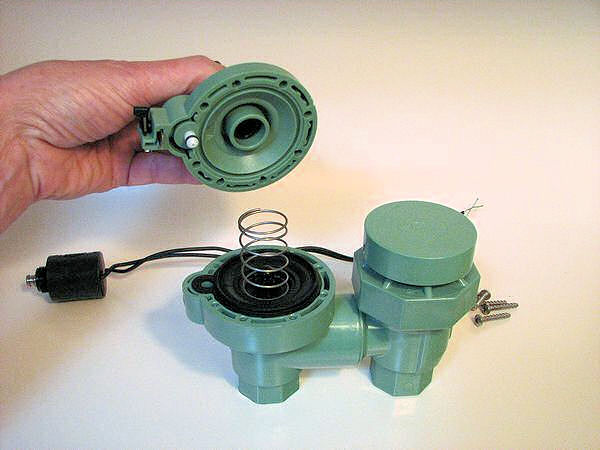
When a solenoid valve (also called an electric valve or automatic sprinkler valve) fails to close it is almost always because something is stuck inside it. This might be a grain of sand, a small twig, a insect, or even a tiny snail. To fix the valve you need to disassemble and clean it. When a valve fails to open it is usually due to a bad solenoid or bad wiring, although in rare cases a grain of sand stuck inside the valve or a ripped diaphragm inside the valve. The following instruction tell how to disassemble, clean, and inspect the automatic valve.
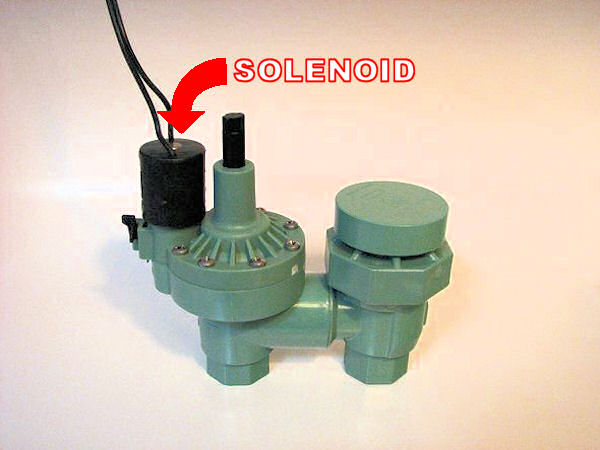
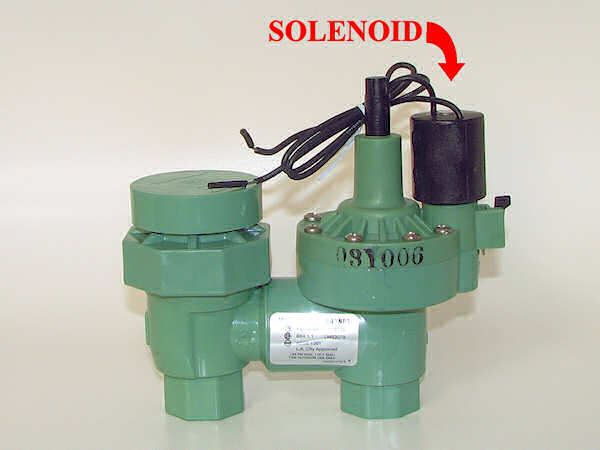
To clean the valve: As you disassemble the valve be sure to note how all the parts fit together so you can get it back together correctly! I strongly suggest you make a sketch and take notes. Each brand and model of valve is slightly different. The valve shown in the photos here is an anti-siphon type valve, which is a type commonly used on home sprinkler systems. The cap structure on the right side of this valve is the anti-siphon device.
Typical Anti-Siphon Type Solenoid Valve
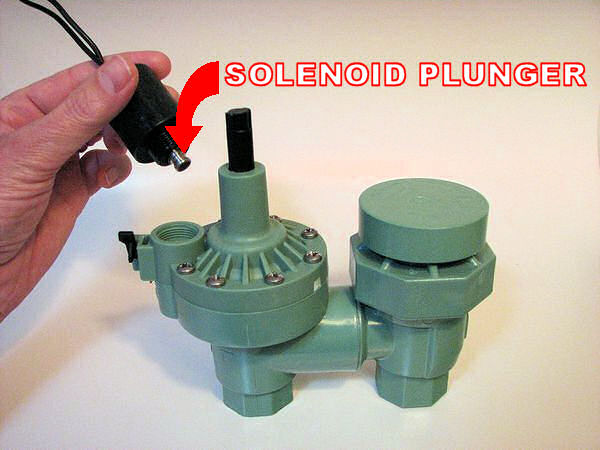
Remove the solenoid from the valve. Most solenoids unscrew counter-clockwise to remove. When removing the solenoid watch that the spring loaded plunger inside it does not pop-out and fall into a mud puddle. On most newer valves the plunger is held “captive” so it won’t fall out when the solenoid is removed, but sometimes even those ones come loose. Once the solenoid is removed, push in on the end of the spring-loaded plunger in the solenoid. It should spring gently back out when released, and it should slide in and out smoothly when pressed several times in a row. If the plunger doesn’t move easily and smoothly, replace the solenoid; it is damaged and can’t be repaired. Do not apply any oil or lubricant to the solenoid plunger, if it is sticking it is not repairable, replace it.
Solenoid Removed, Showing Plunger
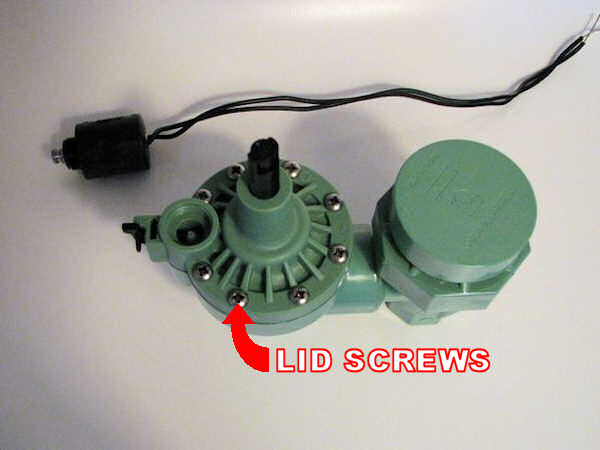
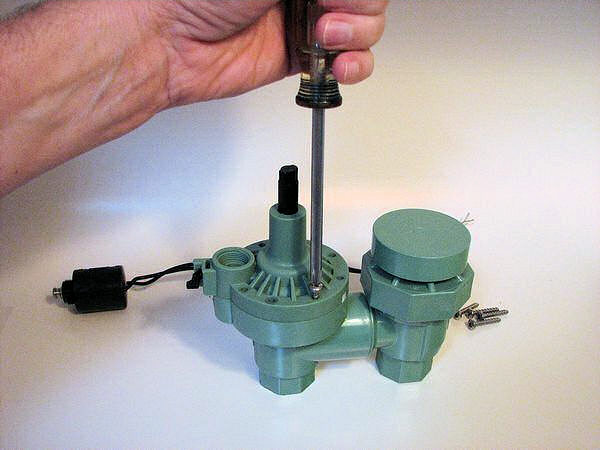
Remove the valve lid, most are held in place by several metal screws. Some models of valve have lids that screw off like the top of a jar, turn counter-clockwise (lefty losey) to remove this type of lid. You may need to use a strap wrench to remove the jar-top style lids. All valves have a spring under the lid, don’t let it fall out into the mud! Remove the spring and set it aside.
Valve Lid Screws
Removing Valve Lid Screws
Watch that the Spring Does Not Fall Out When Removing the Lid
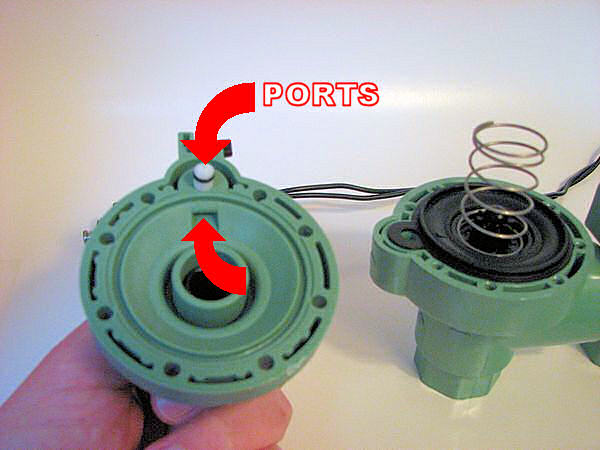
Look for the tiny passages, called “ports”, inside the valve lid. These ports lead from the bottom of the lid to the area where the solenoid was attached. The exact location of the ports varies with each valve brand and model. Make sure these passages are not clogged with a grain of sand or whatever. Be careful you do not scratch or enlarge these passages when trying to get the sand out! Do not try to drill out these ports to clean them or make them larger.
Ports in Lid
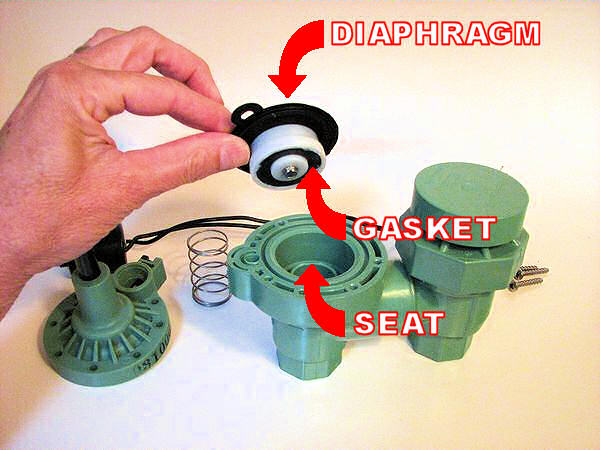
Remove the rubber diaphragm from the valve. Make sure it is not cracked or broken, if it is replace it. Some valve models also have a port in the diaphragm, check to see if there is one, if so make sure it is clean. On some valves the port in the diaphragm has a metal pin that runs through it, the purpose of the pin is to keep the port clean. The pin should slide freely in the port. The diaphragm in the photo below has a separate, removable seat gasket attached to the bottom of it with a screw. On many valves the rubber seat gasket and the diaphragm are one piece and the seat gasket is not removable. Make sure the seat gasket or diaphragm seat does not have anything stuck on it, like a grain of sand or twig. If the gasket surface is scratched or torn replace the gasket or diaphragm.
Examine the valve seat in the bottom of the valve body. The seat is the part of the valve body that the gasket presses against to stop the water flow through the valve. Make sure the seat is not scratched or pitted, if it is the valve will leak when closed. On some valves the seat is replaceable. On some brass valves the seat can be ground down with a special tool to remove pits and scratches. However, for most valves if the seat is scratched or pitted, the valve is not repairable and must be replaced.
Rubber Diaphragm and Gasket
With the valve disassembled turn on the water to flush any remaining sand and crud from the pipes upstream of the valve. Turn it on full blast, and run it for a minute or two, you need to get everything out of that pipe. Turn off the water, and dry yourself off. I know you don’t want to get wet, but don’t skip flushing the pipes and valve body, this is an important step!
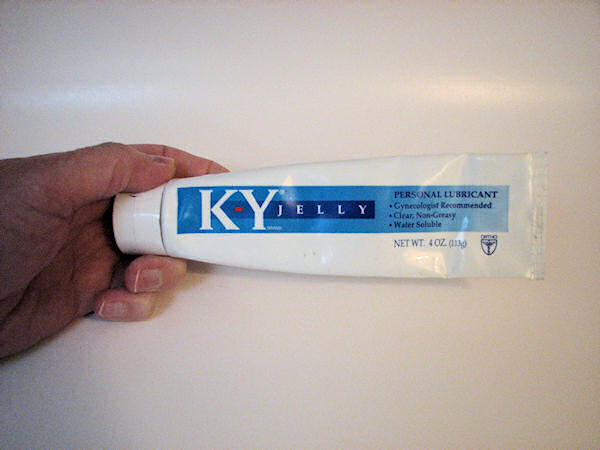
Carefully clean everything, then reassemble the valve. Some valves have a separate lid gasket or o-ring that needs to be cleaned or replaced before being reassembled. If there are any o-rings, I strongly suggest you lubricate them before reassembling using K-Y Jelly or a similar product. Lubricating o-rings is optional, but recommended as it keeps them from crimping during assembly. If the o-ring crimps it will be ruined and will leak. K-Y Jelly is a water-based lubricant that you buy in the feminine hygiene department of a supermarket or drug store. (Don’t ask for it at the hardware store unless you want to give the employees a good laugh at your expense. Yes, I admit I fell for this back when I was first starting out in this business, it’s a favorite plumber gag to send the new guy out to buy the K-Y Jelly!) Do not use vaseline, silicone, oil or any petroleum based products on the valve, they may damage the seals and also may clog the ports in the valve.
Use K-Y Jelly to Lubricate Rubber Parts of the Valve Do Not Use Petroleum-Based Products!
When attaching the lid, avoid striping out the lid threads and warping the lid as follows: When inserting the screws that hold the cap on, start with one of the screws next to the solenoid. Insert the screw in the hole then turn it counter-clockwise (losey lefty) until you feel a slight click as the screw finds the threads. Then reverse direction (righty tighty) and lightly tighten it. Then insert the second screw on the opposite side of the valve lid. Like the first, find the threads then just lightly tighten the screw. Continue with one screw on one side and the next on the other until they are all in. Now go back and tighten them all, going in the same order you inserted them. Do not over-tighten the screws on plastic valves, you will strip out the threads.
If you’re blessed and didn’t mess up something the valve should work correctly now.
Suggestion: Your valve has already failed once, chances are that means something in the water got stuck in it, which means there is sand or whatever in the water supply. Consider installing a filter upstream of the valve to keep out the sand and crud in the future. Typically the cost of a valve repair is greater than the cost of installing a filter. See the Irrigation Water Filtration Tutorial.
Buzzing solenoids are usually caused by insufficient voltage reaching the valve solenoid. Unfortunately there are many things that can cause insufficient voltage. To determine what the problem is requires testing for each of the possible causes.
First off, what’s a valve solenoid? The valve solenoid is the small device attached to the valve that the wires lead to. It is what makes the valve open and close when an electrical signal is transmitted to it by the irrigation controller. The solenoid is actually a electro-magnet that operates a plunger, which serves as a pilot valve, but that is not important for what we want to do here. It is normal for the solenoid to make noise, it clicks when the valve is turned on or off. It also is normal for a very soft buzzing sound to be heard when the valve is activated, but you should not be able to hear it unless you put your ear near it. If you can easily hear it buzzing, that is not normal.
Solenoid on an Electric Anti-Siphon Type Valve
What’s an irrigation controller? “Irrigation controller” is what we in the irrigation industry call the timer that is used to automatically control the irrigation system. The controller has a valve circuit (often called a “station”) for each of the valves it operates. It turns on the valves by sending a 24-volt current to the valve from the circuit/station.
General suggestion: Purchase new valves and controllers from a store that will allow them to be returned. Some of the diagnostic routines listed here are trial and error. Purchasing from a store that has a generous return policy will allow you to return an item if you find it wasn’t the problem.
Irrigation test equipment can be purchased that will test the controller, valve, and/or wiring. The procedures below do NOT require that you have a tester, but a tester does make it easier. If you don’t have a tester(s) and want to look into buying one, see the Reviews – Accessories, Tools, and Other Products section of this website. It has reviews of some valve testing products.
The procedures that follow require the use of an electric valve activator. Most valve testers have a built-in valve activator. If you don’t have a valve tester, you can make your own valve activator very easily. For complete instructions on making a simple valve activator see this link: Irrigation Valve Activator.
OK, let’s get started.
Test #1
Are there multiple valves operated by the same irrigation controller? Do they all buzz? If not, go to test #2.
If all the valves buzz when they are turned on, it may just be that the valves you have normally buzz. Some brands softly buzz during normal operation. You might try calling the valve manufacturer’s customer service number and asking about it. If the buzzing isn’t soft or normal, the problem is probably a bad controller or a bad common wire. (The common wire is usually a white color, and it is connected to all the valves.) If you have an irrigation tester that includes a controller circuit/station output test, use it to check the controller output. If the test indicates a bad controller, replace the controller.
To check the controller without a tester, disconnect the common wire and one of the valve wires from the controller, connect them to your valve activator, and turn the valve on using the activator. Does the valve solenoid buzz now? If not, the problem is very likely the controller, try replacing it. Buy a new controller from a store that will allow you to return it if it turns out it isn’t the problem. If replacing the controller does not stop the buzzing continue to next step.
Test #2
Sometimes there is just a loose or incomplete wire splice or connection causing the buzzing. Turn on the valve using the controller. Go to the buzzing valve and check the wire connections. If they have the twist or screw-on type wire connectors, try tightening them by turning the connector clockwise. If they are a different type of connector, just twist the wires around a bit, or push them firmly into the connector to see if you can make a better connection. If the buzzing stops then you simply have a bad wire splice. Turn off the valve using the controller. Remove the old splice and make a new splice using a NEW connector. Be sure the splice is water-proof or your next problem will be a rusted-out solenoid! Water can be pulled up into the solenoid from a non-waterproofed splice. The water is pulled through the tiny spaces between the multiple wire strands by capillary action. Not properly water-proofing of the wire splices is the #1 cause of solenoid failure! Taping the splices with electrical tape will NOT sufficiently water proof them. Use special water-proof connectors that you can buy at any hardware store.
If messing with the splices doesn’t work, disconnect the wires completely from the valve (you may have to cut the wires.) Strip some insulation off the end of the valve’s wires. If you have a valve tester, connect the tester to the valve and test the valve. If the test shows a bad solenoid, replace the solenoid or the valve.
If you do not have a tester (or if the tester indicted a good solenoid) connect the valve activator to the wires. Turn on the valve using the valve activator. The valve should open and there should not be any buzzing.
If the valve does not buzz when activated the problem is either that the wires from the controller to the valve are bad, or possibly the irrigation controller itself is bad. Proceed to test #3.
If the valve still buzzes when turned on with the activator, the solenoid on the valve is dirty or bad. Turn off the water, then take the solenoid off the valve and clean both the solenoid and the area it came out of on the valve. Most solenoids are connected to the valve with threads, just unscrew the solenoid to remove it. The solenoid has a spring loaded plunger in it, watch that it does not pop out when you remove the solenoid.
With the solenoid removed turn on the water for a few seconds to blow out the passages in the valve. When you do this water should spray out of the area where the solenoid was (protect your face, often bits of sand, plastic, or metal will fly out with the water.) If water doesn’t forcefully spray out of the valve, turn off the water and check that the tiny passages in the valve lid under the solenoid are not blocked. Use a small piece of wire to push any trash caught in the passages out, but be very careful, do not scratch the sides or top of the passages. Do not try to clean the passages by drilling them out with a drill bit. You probably will need to remove the lid from the valve to clean the passages. Most valve lids are held on with screws (the lid in the photo above has numbers stamped on the side of it and is held on with silver screws), however, some lids screw off like the top of a jar. If you do remove the valve lid, make a drawing of how all the valve parts under the lid fit together as you remove them, so you can reassemble it! Clean all the parts and put the valve lid back on after you are done. If you leave even a single grain of sand inside the valve, it may cause the valve to fail and then you will have to reclean it!
Clean the solenoid, and check the plunger. If you push on the end of the plunger it should easily slide into the solenoid. It should spring back out when released. If the plunger does not move easily or the spring does not push it back out, replace the solenoid. In my experience trying to clean or repair the plunger doesn’t provide a long-term fix. Make sure the area of the valve lid under the solenoid is still clean, then put the solenoid back onto the valve.
Now try testing the valve again using your tester/activator. If it still buzzes the problem is a bad coil in the solenoid and it is not repairable. Replace the solenoid or the whole valve. If the valve is more than 10 years old and isn’t a top quality valve, you probably should just replace the entire valve, it is getting pretty old.
Test #3
Go to the controller and disconnect the common wire and the valve wire for the valve that buzzes from the controller.
If you have an irrigation tester that includes a controller circuit output test, use it to check the controller output on each circuit/station. If you find bad circuits, mark them as bad and use other circuits if you have extras. If you don’t have any extra valve circuits you will need to replace the controller.
If you don’t have a controller circuit/station tester, connect your valve activator to the valve wires at the controller and use it to turn the valve on.
If the valve is still buzzing, you likely have a bad wire or wires between the controller and the valve. Replace the bad wire(s) or use a work-around solution. (See below.) If you decide to replace wires, before you dig trenches or string new wires through difficult to access locations like a crawl space or an attic, just lay down temporarily wires between the controller and valves. By running temporary wires between the controller and valves you can confirm that bad wires are the problem and also determine which wires are bad. Wire is expensive, so for temporary wires I suggest buying a packaged wire rather than a custom-cut length off of a large spool. Don’t cut the wire, just leave any extra wire coiled while doing the test. Strip off just enough insulation on the ends to make your connections. Most stores will take packaged wire back as a return if you haven’t actually cut it to a shorter length. Simply disconnect the old wires and hook up the new temporary wires in their place. Once you have identified which wires are bad you can cut the wire to the proper length and install the new wires in their permanent position. If the valve still buzzes with a new wire, it’s time to replace both the valve and the controller with new ones, if you haven’t already.
If the valve does not buzz when activated with your valve activator, you probably have a bad controller circuit/station. Try swapping the valve onto a different controller circuit. At your controller, disconnect the wire for one of the valves that is not buzzing, and hook the wire for the buzzing valve up to that circuit. If the valve solenoid still buzzes after being switched to the new circuit, it means the wire to the valve is probably bad. See the procedure for replacing the wires in the paragraph above. If it doesn’t buzz anymore, it means the controller circuit that the valve was previously connected to is bad. If you have a spare circuit on the controller, you can use it to control the valve. If not, you will need to replace the controller.
Work-Around Solutions for Bad Wires
If you have bad wires that you don’t want to replace there are a number of products made to provide a solution using the wires you have.
2-Wire Controllers. If you have at least 2 good wires you can use a controller that utilizes only 2 wires. These controllers hook all the valves up to the same 2 wires, and a special decoder is installed at each valve. The controller turns on the valves using a signal sent to the decoders.
Wireless Controllers. There are some controllers that use wireless transmitters to control the valves.
Battery & Solar Powered Controllers. These controllers are installed at the valve location and are powered by batteries, sometimes with a solar battery charger.
Double Up Devices. These are devices that allow you to install two valves on the same wire. They each work slightly different so you will need to do a little research to figure out which would work best for you.
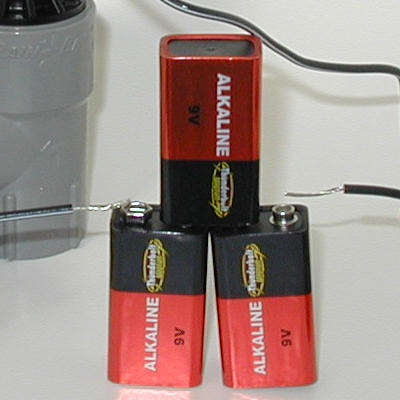
You can easily make a simple valve activator or valve tester to turn on electric irrigation valves in the field. It’s easy. Cheap. And it works great!
Take 3 standard 9-volt batteries (the rectangular type with snap connectors on top.) Using the male and female snaps on top of the batteries, snap all three of them together in a chain. This creates a home-made, portable, 27-volt “valve activator”.
Remove the splices from your valve wires. Now attach the valve solenoid wires to the two open end terminals on your battery chain. The valve should open.
For a more professional approach you can purchase irrigation valve activators/testers that will not only activate the valve, but will also test that the wires and solenoids are within acceptable performance standards. See the Reviews – Accessories, Tools, and Other Products section of this website for reviews of some available products.
Plastic to metal connections are made using threaded connections. A plastic male thread is used to connect to metal female threads.
Do not use a plastic female threaded connector with a metal male connector! The joint will almost always leak or break.
The standard IPS type threads used on pipe and fittings are not uniform in diameter. For example, if you look closely at a male pipe thread you will notice that the diameter at the first thread on the end of the fitting has a smaller diameter than the last thread. Likewise with a female thread the first thread at the end has a larger diameter than the last thread. There is a good reason for this. When you are screwing the threads together it actually does get tighter! As the threads are screwed together it starts to compress the male fitting while stretching the female fitting, resulting in a very tight joint that doesn’t leak. This is why it gets so much harder to turn the pipe as you continue to tighten the joint. However this creates a problem if you are joining two different materials together. If one is softer than the other, then the softer one will do all of the compressing or stretching. Compressing is generally not a big problem, but stretching too much can be bad news for the strength of the material. To adjust for this effect, female threads on fittings and valves are often reinforced by making them thicker. Look at a typical metal female fitting like a coupling and you will notice the reinforced end. For plastic valves they not only use thicker plastic, they sometimes will place a metal ring around the female end, or put fiberglass reinforcement in the plastic.
Plastics like PVC create more of a problem since plastic easily stretches compared to almost all metals. Because of this, you should (almost) never use a female PVC fitting with a male metal fitting. Since the male metal thread is harder, the male threads don’t compress and all the “give” comes from the female PVC. The result is the female PVC is stretched beyond it’s strength limits by the hard metal, resulting in tiny stress cracks and leaks. The exception I hinted at is that there are some specialty plastic fittings available that have a combination of heavier plastic and metal reinforcement rings to give them sufficient strength to withstand stress cracking. Typically these fittings are only used on large agricultural, park, and golf course irrigation systems.
There is also another type of threads called “acme threads” that do have uniformly sized threads. These are the type of threads used on items that need to be easily disassembled, like jar lids.
Sealing Tapes and Pipe Dopes
When making threaded joints you need to use a sealer/lubricant. This is a product that helps seal the joint and also serves as a lubricant to make it easier to screw the male end into the female. The standard products for this are either Teflon pipe dope, Teflon tape, or PTFE tape. For sprinkler systems Teflon or PTFE tape is preferred. If pipe dope gets into the pipes the water will carry it to the sprinklers and it will gum them up (using pipe dope also voids the warranty on most sprinklers.) Some pipe dopes made for metal pipe are not compatible with plastic. They will harm the plastic resulting in future failure. Stick to Teflon or PTFE materials that are labeled for use on plastic.
If using pipe dope spread it on the male threads. Try not to get any on the last thread on the end, so it doesn’t get squeezed into the inside of the pipe. Put a good thick coat on starting with the second thread from the end. Most pros use Teflon pipe dope because it is faster and takes less thinking than Teflon tape to install. (Teflon tape must be put on in the correct direction or it comes off.) But they pay the price with ruined sprinkler heads they have to later replace.
Some Teflon tape, sold typically at discount suppliers, is very, very thin. If you can hold the tape up to a light and see the light through it you have some very thin tape and you will need to use a lot more of it. Use about 9-10 wraps around the male threads when using the cheap thin tape. I find it is actually cheaper to buy the more expensive thicker tape.
For good-quality tape it takes 3-4 wraps around the male threads to create a good seal. Don’t put tape on the first thread and you will find it easier to get the joints started. Pull the tape tight around the threads as you put it on, but don’t stretch it too much. You should be able to see the shape of the threads through the tape. Wrap the tape around the pipe threads in the same direction as the female threads will screw on. (Clockwise if you are looking at the end of the male threads.) If you go the other direction the tape will tend to come off as you try to thread the ends together.
I prefer to use the pink colored “extra-heavy”, “full density” PTFE tape. I almost never use pipe dope.
Water Pipe Noise and Things that go Bump in the Night.
Is your sprinkler system making odd noises? That sound may be water hammer, but then again, there are other things that create noise in water pipes. Air in the pipes can cause them to make sounds which are easily confused with water hammer. In a few cases I have dealt with, the thumping turned out to be loose pipes striking each other. What I will attempt to do in this tutorial is take you through a few steps to determine the source of the sound and then suggest some remedies. I will start with the easy fixes (that are, unfortunately, less likely to work) and then move on to tougher ones (which are more likely to work.)
Many years ago I was called in to consult on a large high school irrigation system that was having water hammer problems. The water hammer was literally blowing apart the system. Two guys were working full time just repairing the pipe breaks! They had tried for months to fix it and numerous irrigation equipment salesmen had checked it out. They had spent hundreds of dollars on adding additional equipment which was supposed to cure the problem, such as air vents, and a “huge water hammer arrester”. But the problem continued. We looked at the original plans for the system and the problem was almost immediately obvious. The water was flowing through the system backwards! Apparently someone decided to move the well location from one end of the property to the other. They didn’t bother to redesign the sprinkler system, they just ran the water through it from the other direction. Unfortunately, that meant the water started out in the smallest pipe in the system. I suggested they add a second pipe next to the small one that was restricting the flow. They did, problem solved, no more water hammer! They could have saved thousands of dollars in repair work and unneeded equipment. The moral of the story is always look for the source of the problem before you try to fix it.
A quick disclosure before continuing- these explanations are intended for the average Joe. All you physicists and engineers out there need to relax. I realize these are not perfectly accurate scientific explanations. There are other websites that dwell into the nitty-gritty details with lots of formulas that will make your day. You’ll find one at http://www.lmnoeng.com/WaterHammer/WaterHammer.htm. It has lots of formulas! The majority of the people reading this do not want to deal with scientific theory and mathematical problems, they just want to know how to quiet things down so they can sleep at night!
Some of the solutions I mention in this tutorial may not meet plumbing codes in some areas. Plumbing codes and standards vary from city to city. It is always best to check with local building department officials before modifying the plumbing inside your home.
Identify the Problem
The first thing to check is the water pressure in your house. You can buy a pressure gauge for this at most hardware and home improvement stores. Attach the gauge to the cold water outlet for your washing machine. (Some water will spill out of the washing machine hose when you remove it, so hold a towel under it.) Turn off the water for anything in the house that uses water. This includes all the faucets in the house, ice makers, reverse-osmosis type water purifiers, and make sure the toilets aren’t filling. Any water running in the house may cause an inaccurate reading on the gauge. Turn on the water faucet that the gauge is attached to, and then read the water pressure on the gauge. That’s all there is to it!
Pressure Gauge attached to laundry outlet.
After the test turn off the water and disconnect the gauge. (Some water will spill out of the gauge when you remove it so hold a towel under it when you remove it.) The pressure reading you get from the gauge should be 60 PSI or less. Pressures higher than 60 PSI can be the source of the noise problem. But just as important, water pressures higher than 60 PSI can cause a lot of other plumbing problems too. So if the pressure is higher than 60 PSI you need to fix that first. The solution for high water pressure is to install a pressure reducing valve on the pipe that brings water into your house. (Pressure reducing valves may also be called “pressure regulators” or “pressure regulating valves” depending on the brand of valve and where you buy it.) If you already have a pressure reducing valve it is probably broken. They tend to break or wear out after about 10-15 years of service. You can try adjusting it to see if it is just set wrong, however be prepared for the need for an immediate replacement if you do this. If one of the parts inside the pressure reducing valve is broken, the valve may jamb closed when you try to adjust it. If this happens you will need to replace the valve immediately! To adjust the pressure on the valve you turn the bolt that protrudes from the bell shaped part of the valve (see photo below). When selecting a new pressure reducing valve make sure you get a brass-body model similar to that shown in the photo below. Warning: installing or replacing a pressure reducing valve involves a moderate to high level of plumbing skill, you may want to hire a plumber for this if you are not experienced with plumbing. Typically it requires cutting pipes. (Yes, the pressure on the gauge in the photo above is 112 PSI. The pressure reducing valve on my house was broken when I took the photo. So it happens to all of us.)
Pressure Reducing Valve/ Pressure Regulating Valve/ Pressure Regulator No, it’s not installed upside down. This particular valve is installed on a pipe where the flow is going up.
If the water pressure is less than 50 PSI, then the next thing to check is for loose pipes that may be bumping each other, making noise. In the case of loose pipes the sound will usually become much louder as you approach the source. In one instance a tutorial user wrote me to say that he discovered that the problem was a backflow preventer that wobbled when the irrigation system was running and bumped the side of the house. So start by listening for a sound source and looking for anything loose. It would be frustrating to spend tons of money trying to fix what you thought was a water hammer problem only to discover the fix was to stuff a 50 cent piece of foam between two pipes!
When water moves through a pipe it makes noise. Although it might seem to be a smooth flow, the water inside the pipe actually churns and tumbles as it moves through. The normal sound of water moving through pipes is a steady, even sound. The best way to know what it sounds like is to go turn the bathtub water on full blast, then go to other rooms of the house and listen. (Don’t let the tub overflow!) Some newer bathtubs don’t use enough water to make the pipes “sing” so you may have to turn on several faucets at the same time to create enough volume. The sound you will hear is the normal sound of water flowing through the pipes. If that is the sound you are hearing that is bothering you, then unfortunately, there is little you can easily do about it. Water makes more noise as it moves faster through the pipes. Replacing the pipes with larger pipes will reduce or even eliminate the noise you can hear. But that is a huge undertaking.
A continuous thump, thump, thump noise, consisting of evenly spaced thumps when the water is running may be caused by a under-size water meter. The noise may also be a tapping sound. The noise may appear to come from the water heater as the tank amplifies the sound. Check the water meter, you will likely hear the noise coming from it. The solution is to install a larger meter.
A pipe that is changing temperature will clunk as it expands or contracts. The noise results from the pipe suddenly shifting position. This is common inside a house when hot water is turned on. The hot water flows into the cold pipes causing them to expand. But this temperature change related noise may also occur in less expected times and locations. For example a water pipe that supplies irrigation water may pass through an attic or crawl space where it may get hot on a warm day. When the irrigation comes on cold water is pulled into the pipe, causing it to contract and make noise. The key to pipe expansion/contraction related noise is that the clanking noises are not uniformly spaced, they occur randomly. The noise is generally noticeable but not loud. The noise occurs soon after water is turned on someplace and stops after a minute or two as the pipes reach the new temperature. Installing insulation on the pipes may help reduce the noise. Loosening straps that hold the pipes in place may also reduce the noise by allowing the pipe to slide easier as it expands and contracts. Often there is little you can do to completely eliminate this type of noise and it is something you will just have to live with.
Air in the pipes can cause an awful lot of noise! It can be much worse to listen to than true water hammer. The noise of air in the pipes is often a vibrating sound or a rapid ticking sound similar in pace to a machine gun firing. (At least what one sounds like in the movies.) Air in the pipes can be really difficult to get rid of. Air tends to get trapped at high points of the pipe system where it is difficult to push out. As the water moves in the pipes it breaks the pockets of air up into tiny bubbles. Then the water flows past the bubbles, leaving the air still in the pipe. These tiny bubbles moving around, and expanding and contracting, are that rapid vibrating sound you hear. (Everyone who has been to Hawaii knows how annoying the sound of Tiny Bubbles can become after a few repetitions.)
Water hammer can also be the source of the noise. Water hammer can be a big thump that shakes the house, or a series of banging noises starting with a loud bang followed by several “echoes”. The best way to identify if the noise is water hammer is to ask yourself “when does it happen?” If the noise occurs when you open a valve or a faucet, it is probably air in the pipes. If it occurs when a valve closes or the washer changes cycles, it is probably water hammer. If it occurs when a pump starts, it could be water hammer, air in the pipes, or both. Although opening valves can sometimes create water hammer, this typically only occurs with valves larger than 3″ in size, and even then it is reasonably rare. In fact, in my 20+ years in the business I have never actually seen water hammer caused by a valve opening.
So here’s your noisy pipe checklist:
Noise when a valve closes = water hammer.
Noise unrelated to valve opening or closing = air in pipes or loose pipes moving around and striking objects.
Noise when a pump starts = water hammer and/or air in pipes.
Loud single thumps or multiple quick bumps, then no noise. This tends to be water hammer.
Vibrating and prolonged noises tend to be air in the pipes.
A continuous, uniformly spaced tap, tap, tap noise when water is running may be caused by an under-size water meter.
As hot water flows into a cold pipe, or cold water into a hot pipe, the pipe will expand or contract and make noises. This will create a clunking noise that goes away in a minute or two once the pipe fully changes temperature.
Air in the Pipes
There are only two ways I know of to get the air out; push it out by increasing the water velocity (speed), or open the pipe and release the air.
To push the air out you need to temporarily increase the water velocity to the point the water “sweeps” out the air bubbles. To increase the velocity you need to turn on as many water outlets as possible. That creates a high water demand and the water velocity goes way up. As the water rushes through the pipe the trapped air is swept along with it and out of the pipe.
If the air is in the irrigation mainline (a mainline is the pipe upstream of the circuit control valves) you should be able to increase the velocity by manually opening two or more of the circuit valves at once. Most electric irrigation valves can be manually opened by twisting a lever under the valve’s solenoid (the thing the wires go into), or by partially unscrewing a bleed screw on top of the valve. Do not remove the bleed screw, just slowly turn it until the valve opens. Open all of the valves at the same time if you need to. Let the water run for a while to give it a chance to push all the air out. When you close the valves close them one at a time. Closing them all at once can cause a pressure surge that can damage your irrigation system. Don’t be surprised if the valves take a long time to close, this is fairly normal when more than one valve is opened at the same time. If the electric valves won’t close, slowly turn off the main water supply to the irrigation system, wait one minute, then slowly turn it back on. They should now be closed.
If the noise only occurs when an individual sprinkler valve (always the same valve) is opened the air may be in the lateral pipe (the pipe downstream of the valve.) In that case you will need to temporarily remove some of the sprinkler heads on that valve circuit in order to increase the water velocity. Remove the 3 sprinkler heads furthest from the valve and then open the valve to flush out the air. If that doesn’t get it out try removing more sprinklers. After the air is flushed out, put the sprinkler heads back on. If that fixes the problem temporarily but it returns after the next time you irrigate, then the problem is that the water is draining out of the pipes through the sprinkler heads after each irrigation. This is probably because one or more sprinkler heads are lower than the others. When the water drains out, air gets back into the pipes. To prevent this you need to install “anti-drain check valves” at the inlet of each sprinkler head. The anti-drain check valve is a small spring-loaded check valve. The check valve holds back the water so it doesn’t drain out. It does not effect the performance of the sprinkler head noticeably. Many sprinkler heads are available with this feature built-in to the sprinkler. Some brands also have retrofit kits available that allow the check valves to be easily installed in existing sprinklers. The built-in anti-drain check valves do not effect the performance of the sprinkler at all.
If the air is in your household pipes try turning on all the faucets in the house and then flush all the toilets. Again, give it a few minutes to push that air out. If you know where the water supply comes into your house turn off the faucets starting with the one closest to the water supply entry point, then close them one at a time moving away from the entry point. As you come to a toilet when you are moving through the house turning off faucets, flush it again, then wait two minutes before closing the next faucet. Don’t forget the faucets on the outside of the house!
If the above procedures didn’t get the air out…
Next try a water hammer arrestor. This often doesn’t work with air problems, but it’s worth a try. At your local hardware or home store look for a pre-packaged water hammer arrestor that attaches to a standard washing machine cold-water outlet. The ones I have seen come in one of those clear plastic display packages, and look like a copper tube with hose connections. Check the return policy of the store before you buy it, if you can, buy it someplace where they will take it back if it doesn’t work. Make sure you keep all the packaging. Install it per the directions on the package. If it doesn’t work, remove it and return it.
If the air can’t be pushed out, and the water hammer arrestor didn’t work, you will need to find where the air is trapped in the pipe and “open the pipe” to release it. Air rises above water, so the air is likely trapped in a high spot in the piping. Try to visualize how your irrigation system is laid out. Are there any obvious high points where air might be trapped? If you can identify a likely high point turn off the main water shut-off valve and open a faucet or valve to release the water pressure. Then cut the pipe at the high point and install a tee on it with a small valve on the tee outlet. A compression type tee may be easier to install. A 1/2″ valve, or even a smaller one if you can find one, will work fine for the valve. Do not use a gate valve! Gate valves tend to leak easily. Ball valves work good. See the drawing below. The valve needs to be on a short nipple, a few inches above the pipe as shown. (Stop snickering, in the irrigation business a nipple is the name of a short length of pipe. If you really like to giggle at odd names read the glossary.) Close the faucet and turn the water back on. The air will rise to the highest point which is the short upright nipple under the valve. You can then open the valve just a little bit to let the air escape. Some water is going to come out too, so be prepared for it to squirt! After releasing the air put a plug in the outlet of the valve for safety.
Sometimes you will get all the air out and everything will be fine for a while, then without warning, the air noise will return. This is because the water coming into your house or irrigation system sometimes has air trapped in it. Have you ever filled a glass of water from the kitchen faucet and noticed it was a milky white color? But after sitting for a while it turns clear. That white color most likely was caused by tiny bubbles of air in the water (at least I hope it was!) This air can get in the water lots of ways, it is fairly normal and doesn’t by itself mean your water is polluted or not drinkable. But this air does tend to rise out of the water when the water is sitting in your pipes, and it can form an air pocket in the pipe after a while. This causes the wonderful air noise you enjoy so much to return. If this happens often you can add a “continuous venting” type air vent in place of the valve in the drawing above. The air vent needs to be the type that releases air while under pressure. The type of air vents that are made for most irrigation systems will not work. The type you want has a float connected to an arm that uses a lever to open and close a small valve that allows the air to escape. The correct vent type is often called an “air eliminator” or “air relief valve.” Look for that term “continuous venting”. Most plumbing supply stores will have one. A 1/4″ size one should work fine.
Water Hammer
True water hammer is essentially the sound of a “water wreck” occurring. It happens when moving water suddenly changes speed. Water hammer can be caused by a pump starting or a valve rapidly opening, however in the vast majority of cases it results when a valve closes. Sometimes you can create it simply by closing a faucet very fast. Many single lever household sink faucets will allow you to slam them closed fast enough to cause water hammer. Closing the same valve slowly will not cause the water hammer. However, more often the valve causing the problem is an automatic valve such as is used on an irrigation system. Since most dishwashers and washing machines use the same type of valves as irrigation systems, you will sometimes get water hammer when the dishwasher or washing machine fill valve closes. So for this tutorial I am going to focus on water hammer caused by closing valves. Even though these so-called “electric valves” appear to be powered by electricity, they actually use water pressure as their major power source. The electric solenoid on the valve operates a tiny “pilot valve”. The water flow from this tiny valve is then used to open and close the bigger valve using hydraulic pressure. This works well, but leaves a minor engineering problem. It is very hard to get these valves to close slowly! Engineers have made some great progress but they still haven’t fully defeated what I call the 80/20 problem. The 80/20 problem is that valves close slowly until they are about 80% closed, then they tend to snap fully closed in a millisecond! This causes the water in the pipes to suddenly stop moving. Now we all know the story of Jack and Jill, and the reason Jack fell down is that water is heavy (and perhaps Jack was paying too much attention to Jill , and not enough to his bucket, but I’m getting off-track here.) A column of water moving through the pipe at 7 feet per second carries with it a tremendous amount of weight and momentum. While it’s not a perfect example, the one commonly used is to think of the water in the pipe as a big freight train going through a long tunnel. The valve closing is like blocking the end of the tunnel with thousands of tons of rock. When the train slams into the blocked end of the tunnel there is going to be one horrific crash! The faster that train is moving, the worse the crash will be. Thus the problem with water velocity in the pipe. The faster the water is moving, the worse the crash is going to be when the valve closes. That crash is the cause of a big thumping noise when the valve closes. Secondary thumps that follow are essentially “echoes” in the pipe.
Now that thumping sound would be bad enough, but a unique property of water makes the problem much worse than just an annoying noise. Water is essentially non-compressible (it compresses a little bit, but not much.) So all the energy it carries with it when it slams into the closed valve has to go someplace. So the energy creates a brief, but enormous, spike it the water pressure in the pipes. This spike can easily double or triple the water pressure in your system. The pressure spike occurs so fast that a standard pressure gauge will not even register it. But this increased water pressure doesn’t just hang around the vicinity of the valve. It passes as a shock wave back through the pipe at (almost) the speed of sound in water, seeking a way out. This creates stress on the pipe, and if there is a weak point in the piping the pressure surge will find it. So each time the water hammer occurs it is putting stress on the pipe, which weakens the pipe. If you hear the noise in your house, then the pipe in the house is being damaged, even if the source of the surge is someplace else. It shock wave travels through the water in the pipe. So what kind of damage does it do? Consider a standard rubber balloon. You blow up the balloon then let the air out. You do this again and again. Each time the balloon gets stretched a little more and weakens. After being blown up many times the balloon simply bursts. You didn’t blow any more air into it than before, it just was weakened by the constant expanding and contracting. The pipes in your home and irrigation system stress in a similar manner when exposed to these pressure spikes. Where is the most likely weak spot where it will break? In my experience the first pipe to go is in the house, not the sprinkler system. It is often the tube connecting a toilet or sink to the household water system, which is usually a hose or thin wall pipe. The result is a flooded bathroom. If you made an error in installing the irrigation system and forgot a clamp or didn’t get a good strong glue joint you may see a leak there. A small pinhole leak in plastic irrigation pipe or hose very quickly enlarges to the diameter of a pencil. Points where the pipe changes direction also take a beating as the pressure surge wants to continue in a straight line rather than go around the bend. There is one last frustrating problem with water hammer, which is that the sound you hear often appears to be coming from someplace other than the point where the water hammer was created. This is because sound travels very well through the pipe and the water in it. So you can’t rely on your ears to find the source of the water hammer.
Water hammer is influenced by three variables, understanding these variables will help you find the source of your water hammer problem.
The first variable is the length of the pipe the water is traveling through. We can’t do much about the length of your pipes, assuming that you can’t move your house closer to the water source. But it is an important factor in creating water hammer, so it is useful to take a look at it, especially as it relates to the pipe size. For example, in some situations you can force a high rate of flow through a small pipe without problems, provided the length of the pipe is short, say, a few feet. The shorter the pipe, the smaller it can be. Knowing this will help you when you try to identify the source of the water hammer. So keep in mind that a small pipe may not be a problem if it is a very short length.
The second variable is time, or specifically how fast the water is being stopped. When a closing valve is causing water hammer, time is how long it takes for the valve to close. Most irrigation valves take several seconds to close. Theoretically this would not cause a problem, as several seconds is very slow when dealing with water hammer. The problem is that 80/20 ratio I mentioned previously. The valve may take a few seconds to go from full open to full closed, but it has a tendency to snap closed when it gets down to that last 20%. Realistically the actual closing time of a typical irrigation solenoid valve is around 1/2 to 1 second as best I can tell. But it varies greatly, even when testing the same valve. For example, an irrigation valve closes much faster if there is higher water pressure present. It also closes faster as you increase the flow through the valve (increasing the flow creates a greater pressure differential across the valve, which causes it to close faster.) So a valve that would not cause a water hammer problem at a low flow and low pressure, will cause all kinds of problems if you increase the flow through the valve and/or the water pressure.
The third factor that influences water hammer is the velocity of the water. The faster the water is traveling in the pipe, the greater the water hammer. It is this last factor which is easiest for us to correct in a sprinkler system, so most of the suggested solutions for water hammer will be aimed at reducing the water velocity.
Be aware that there are many “quick fix” devices that are supposed to fix water hammer problems for you. My experience has been that air vents, air traps, and water hammer arresters seldom work with automatic irrigation systems. Irrigation systems, particularly sprinkler systems, tend to have much more severe water hammer problems than that found in household plumbing. These devices are made to stop water hammer that is caused by household uses and they will often cure the problem in those cases. But I have never seen one fix water hammer caused by an automatic sprinkler system.
Now you need to do some detective work. Take the time to do some research. Listen for the water hammer noise. What’s happening when, and especially just prior to, the time when the sound occurs? Water hammer is set off by something, it doesn’t just occur randomly. Chances are a irrigation valve closes when the sound occurs. Closing irrigation valves are the source most of the time. Another frequent cause is the fill valve on a dishwasher or washing machine closing. Once you know what happens, you can focus in on it as the potential source of the problem.
Solutions for Water Hammer Caused by Washing Machines and Dishwashers:
If the noise occurs when a washing machine or dishwasher valve closes the problem is that the appliance is demanding more water than one or more of the pipes supplying to it can safely handle. We’ll try the cheapest solution first.
This is the cheapest solution but not really the best. I would only use it as a temporary fix. Try partially closing the shut-off valve for the appliance. Start by closing it half way. If that doesn’t get rid of the noise close it a little more, keep repeating until the noise stops. Closing the valve reduces the flow to the appliance, and thus reduces the velocity in the pipes. Unfortunately many dishwashers and washing machines use a fill timer rather than actually measuring if the washer is full. Sometimes when you close the valve partially the washer doesn’t get enough water and the clothes or dishes don’t get clean. So check to see if closing the valve is creating cleaning problems. If it is, reopen the valve a little and try again.
There should be a short tube that leads from the shutoff valve to a appliance. Often this tube is a piece of 1/2″ hose or a 3/8″ copper tube. This tube should not be more than three or four feet long, if it is longer the tube may be part of the problem, so try replacing it with a larger tube.
The next trick to try is installing a AA-size water hammer arrester on the pipe at the shut-off valve. While these devices are seldom useful for irrigation systems, they often do work with appliances because the water demand is not nearly as high as a sprinkler system. You can get a water hammer arrester at just about any plumbing supply store. At your local hardware or home store look for a pre-packaged water hammer arrestor that attaches to a standard washing machine cold water outlet. The ones I have seen come in one of those clear plastic display packages, and look like a copper tube with hose connections. Check the return policy of the store before you buy it, will they take it back if it doesn’t work? Make sure you keep all the packaging. Install it per the directions on the package. If you are installing it on a dishwasher fill, you will probably need some adapters to make it fit. If it doesn’t work, remove it and return it.
Air chambers are pretty much worthless, none of the building codes recognize them any more for water hammer control. An air chamber is just a long section of vertical tube with a cap on the top of it. The idea is that air is trapped in the tube and absorbs the water hammer shock. They may work for a while, but they become water-logged with time. They also need to be huge, generally at least 3/4″ size and several feet long.. So if someone suggests one, I recommend not wasting your time and money.
The last option is to tear out the walls or floors and install a new, larger pipe to the appliance. Before you do that run a test. Get a 3/4″ heavy duty garden hose. It will cost a lot, but at least you can reuse it in the garden. Hook up one end to the flush outlet on your water heater, and connect your appliance to the other end. Then run the appliance, the water hammer should be gone. If the water hammer is still there, then the pipe in the wall is not the problem.
Typical dishwasher shut-off valve under a kitchen sink. The silver tube looped around the valve is the water supply to the dishwasher. Gray is the dishwasher power cord. White pipe is the dishwasher drain pipe.
Solutions for Water Hammer Caused by Irrigation Systems:
The easiest solution is to lower the water pressure for your entire irrigation system. This doesn’t really get rid of all of the water hammer, but it will sometimes reduce it to a level you can live with. Of course often when you lower the pressure enough to stop the water hammer the sprinkler system stops working too. Lowering the pressure has two effects. It lowers the water demand of the sprinklers, which in turn reduces the velocity in the pipes. That actually reduces the water hammer. Lowering the pressure also reduces the overall surge pressure when the water hammer occurs. That simply reduces the severity of the water hammer, but doesn’t get rid of it. To test if this will eliminate the noise, simply go to the main shutoff valve for the sprinkler system. (If your sprinkler system doesn’t have a shut-off you will need to install one.) Close it down until it is about 50% closed. Now run the sprinkler system. If the water hammer is still there, close the valve a little more and repeat. Continue this until the water hammer goes away. When the water hammer is gone, check your sprinklers. Are they still operating correctly? If they are operating correctly the water from any single sprinkler should be spraying almost all the way to the adjacent sprinkler head (you need about 80% overlap of the water between sprinklers to keep from getting dry spots.) So if the sprinklers are 18 feet apart the water from each one should be covering an area at least 14.4 feet out from the sprinkler (18 x 0.80 = 14.4). If the water is not going far enough you will get dry spots, so this solution will not work. If the sprinklers seem to be still working good leave the valve partially closed for a few days. Do any other problems shown up? Like the showers don’t work in the house or dry spots show up in the lawn? If not you should go to the plumbing store and buy a good quality, brass bodied, adjustable pressure reducing valve. Install it right after the shut-off valve that you partially closed. Then open the shut-off valve fully and adjust the pressure reducing valve until the pressure is at a level where the sprinklers work right but the water hammer isn’t a problem. You should not leave the shut-off valve partially closed for more than a couple of weeks. Most of those valves are not designed to be left permanently in a partially closed position. Also the pressure reducing valve is designed to compensate for changes in the incoming water pressure to your house. The shut-off valve can’t do that. If only one valve zone of the sprinkler system creates water hammer you can try partially closing the flow control stem on the irrigation control valve. If that works, the flow control may be left in a partially closed position permanently, it will not harm the valve.
If you have an automatic sprinkler system you may be able to get rid of the water hammer by simply changing the order in which the valves operate. Simply find out which valve uses the least water. This will probably be the one with the least sprinklers, but not always. Some sprinklers use more water than others. Once you know which valve uses the least water, rewire the controller so that the valve that uses the least water is the last valve to run. If you don’t know which one uses the least water just try all of them in the last position. Since water hammer is directly related to flow, the valve that uses the least water is much less likely to cause water hammer when it closes. The reason putting this low flow valve last works is because most irrigation valves close slowly. So typically valve #4 will not have completely closed when the next valve, #5, opens. So when valve 4 snaps closed it creates a shock wave (water hammer), but the wave passes harmlessly out of the system through valve circuit #5. Don’t worry if you didn’t understand how that works, just try switching the valve order on the controller and see if it gets rid of the water hammer problem! (My thanks to Larry Welch for pointing this trick out to me!)
The next step is to try a water hammer arrestor. As noted before, this often doesn’t work with sprinkler related water hammer, but it’s worth a try. At your local hardware or home store look for a pre-packaged water hammer arrestor that attaches to a standard washing machine cold water outlet. The ones I have seen come in one of those clear plastic display packages, and look like a copper tube with hose connections. Check the return policy of the store before you buy it, will they take it back if it doesn’t work? Make sure you keep all the packaging. Install it per the directions on the package, try putting it on a hose bib close to the point where the irrigation system connects to the house water. If you have a hose bib on the irrigation system mainline, that is an even better place. Or you can tap into the irrigation mainline to install it. If it doesn’t work, remove it and return it.
If the noises were caused by an irrigation valve, then it is likely that someplace between the water source and that valve the water velocity is too high. Too much water is trying to squeeze itself through the pipe. To get through the pipe the water moves faster (higher velocity) and the faster it goes, the worse the water hammer gets. You have to reduce the speed of that water to get rid of the water hammer. Here are some ways to do that.
The irrigation valve may be too small. This is seldom the problem, but I mention it because it is possible. If the valve is the same size as the pipe it is installed on (say, 1″ pipe with a 1″ valve) then it is extremely unlikely that the valve size is the problem. If the valve is one size smaller than the pipe (say, 1″ pipe with a 3/4″ valve) then there is a very small chance that the valve is the problem. It is normal to use a valve one size smaller than the pipe, so this is still is not very likely a problem. If the valve is a couple of sizes smaller than the pipe then there is a reasonable possibility that a larger valve will fix the problem. Also, cheaper valves often snap closed faster than more expensive ones. So a cheap undersized valve might be a good possibility as the water hammer source. It might be worth the effort of replacing the valve.
This next option was once a good one, but now it seldom works because very few of these old sprinklers are still around. Really old sprinkler systems (15 years or more) used sprinklers heads that had a much higher water demand than today’s sprinklers. Typically these sprinklers were made of solid brass. Thanks to engineering advances newer sprinklers have similar performance but use much less water. You could try replacing the old sprinklers with the new, low-flow sprinklers. Start by doing some research. Note the sprinkler manufacturer’s name and the sprinkler model number of the existing sprinklers and do a search for that name and number on the Internet. If the sprinkler is no longer made that’s a good sign. If you can find it check with the manufacturer to find out what the GPM of the sprinkler is. GPM is the gallons per minute of water the sprinkler uses. Next check how far apart the sprinklers are installed from each other. Take that number and multiply it by 0.80. So if the sprinklers are 18 feet apart you will get 18 x 0.80 =14.4 Round up, so use 15. The replacement sprinkler will need to have a radius equal to that number, so in this case it will need a 15 foot radius (not diameter). Go to the store and look for sprinklers that cover that radius. Then check the GPM demand of the new sprinklers. If they use less water than your current sprinklers you can replace the old sprinklers with new ones. It may get rid of the water hammer. It may not. But even if it doesn’t work you get a better irrigation system. Note that if you are using pop-up sprinklers always use the ones with retraction springs. I recommend at least a 3″ pop-up height to reduce maintenance problems.
Splitting valve zones is another method of getting rid of water hammer. If only one of the irrigation valves is causing water hammer the easiest solution is to reduce the amount of water that valve is using. That will reduce the velocity and the water hammer will stop. To do that you need to reduce the number of sprinkler heads the valve operates. The easiest way to do that is usually to install a second valve and connect half the sprinklers to it. That’s likely going to mean doing some trenching and installing some new pipe. So before you do that, you should run a simple test to make sure it will fix the problem. Remove half the sprinklers controlled by the valve and put a cap on the pipes where they were. Now turn on and off the valve several times to test for water hammer. If possible test the valve multiple times at different times of the day over a period of a week. If the water hammer only occurred at certain times of the day be sure to test at those times. For example, often water hammer problems are much worse at night, so it’s a good idea to test a couple of times late at night. If the water hammer is gone, it worked! If the water hammer is still there you may need to remove even more sprinklers. If you remove all the sprinklers and the water hammer is still there, that valve is obviously not the problem! If the water hammer goes away when you reduce the number of sprinklers, then you will need to install a second valve and pipe to provide water to the sprinkler heads that were removed. Make sure the second valve has the same number or less sprinkler heads as the original one. You don’t want to create another water hammer problem! You may even have to install 3 valve circuits where there was one originally.
If the water hammer occurs when several valves close you can split each of them into two or more valves as described above. But you may find that it is easier to install a new, larger pipe to all of the valves. Remember, when water hammer occurs due to a closing valve it is because the water is going too fast in a pipe someplace on the upstream side of the valves. In order to understand this next procedure you need to be familiar with the relationship between your house plumbing and your sprinkler system and you need to know some terminology.
Your water comes to your neighborhood in large “water mains” (pipes), usually located in the street, that supply the entire neighborhood with water. These pipes are owned by the water provider.
From the water main a smaller pipe known as a “gooseneck” carries the water to your property line. This is also owned by the water provider.
Often there is a buried valve known as a “corporation stop” at the point where the gooseneck reaches your property. There may also me a water meter right after the corporation stop. In northern climates the water meter and maybe even the corporation stop will be installed within the house (usually in the basement) to protect it from freezing. The corporation stop marks the end of the water company’s pipe and the start of your private household pipe.
The pipe from the corporation stop to the faucets in your house is the “house water supply pipe“. This is usually a single pipe that branches off to all the faucets when it gets inside the house.
The pipe running from the house water supply pipe to the irrigation system valves is called the “irrigation mainline“. The irrigation mainline connects to the house water supply pipe at some point. Where is anyone’s guess, I’ve seen just about every possibility over the years. There should be a shut-off valve at the point the irrigation system connects to the house water supply. Should be… but often there isn’t. If there isn’t you should consider adding one.
So now it’s time for more detective work. (In this case detective work also means “hard work”.) You need to check all the pipes the water passes through on the way from the water main to the valves to see if there is a “bottleneck”– a section of pipe that is smaller than the others. You will need to check all of the pipes previously mentioned; the gooseneck, the house water supply pipe and the irrigation mainline. You only need to check the pipes in a direct line between the water provider’s water main and the source of the water hammer (most likely the irrigation valves.) To understand this think of all the pipes as if they were roads. Imagine you want to “drive” from the water main to the irrigation valve and you want to take the most direct route. The water also will take the most direct route. So the pipes you want to check are those on that direct route. Don’t worry about any pipes that branch off to elsewhere. The water won’t take any side trips to see the local sights. Like I said, this is going to take some detective work to figure out which pipes the water is going through and where they are! This may require digging a lot of small “test holes” to find buried pipes and determine what size they are. If you are lucky, you will find a section of pipe that is smaller than the others. This is likely the source of the problem, replace it with a bigger pipe. Remember, any of the pipes may be the one that is too small. It could be the gooseneck, the house water supply pipe, or the irrigation mainline.
Here’s a quick tip: if the irrigation mainline hooks up to the location of a former hose-bib on the side of the house, the pipe leading to the hose-bib is almost always the problem. Typically when the house is built, the plumber just runs a 1/2″ pipe to hose-bibs to save money. A 1/2″ pipe is big enough for a hose to water the Petunias, but not big enough to supply a sprinkler system! . Unfortunately many do-it-yourself sprinkler installers do not know this, and some of those stupid “design your own sprinkler system” brochures you get at the hardware store even show people using a hose bib to connect the sprinkler system to. A lot of sprinkler system repair guys have gotten rich thanks to those stupid brochures! Stupid, stupid brochures! OK, I need to calm down and get back on track.
There are numerous materials that pipe is made from. The most common are copper, steel, galvanized steel, PVC, polyethylene, and a new product called PEX.
PVC is usually white (sometimes gray) colored plastic.
Polyethylene (also Polybutylene) is normally black. Polyethylene, often called “poly” or “PE”, is more soft and flexible than PVC, and has a slightly “oily” feel. You can scratch poly with a fingernail, but not PVC (unless you’re using that “tough nails” stuff on them, in which case you can use them to rip out concrete.)
Copper is copper colored when new but often turns green if exposed to the weather.
Steel looks like, um…, steel. You know what steel looks like, right? A magnet sticks to steel but not copper.
PEX is a type of polyethylene, it is flexible like the Polyethylene, but much stronger. It will normally say “PEX” on it, and be a color other than black. Often it is white or blue. and may look a lot like PVC, especially if it is old and dirty! In the absence of the words PEX on the tube, check the diameter of the tube. PEX is typically made to have the same outside diameter as copper tube. Another way to tell is to look for the fittings that connect plastic (non-threaded) pieces together. PVC pipe will be glued together, PEX tube will use barbs with clamps, or compression fittings. If still in doubt, go to a plumbing supply store and check out actual samples to compare with what you have.
To determine the size of the pipe, grab a piece of string about 6″(152mm) long. Strip away any insulation on the pipe, so you can get at the pipe and wrap the string around it. Measure how many inches of string it takes to go around the pipe once. The string length is the circumference of the pipe (yikes, bad memories of high school geometry!). Using the circumference we can calculate the diameter of the pipe, which allows us to calculate the pipe size, zzzzzzzzzz….. Let’s forget all those calculations! Based on the string length use the table below to find your pipe size.
So what if you didn’t find a pipe that was smaller than the others? In this case all of the pipe may be restricting the flow. To fix it you may need to replace all of the pipe. But I would suggest that you start with the pipe that would be easiest to replace. After you replace it test for water hammer. If it is gone, great! If not, go to the next section of pipe. Chances are you can’t replace the gooseneck, since it does not belong to you. Fortunately it is often a short length running just from the water main out in the street to your property line. If it is very short like this the water hammer may well go away or be greatly reduced without replacing it.
There are two ways to fix the small pipe problem.
One way is to remove the small pipe and install a larger one in it’s place. If you replace the existing pipe I suggest that the new pipe be two sizes larger than the old one, just to be safe. Using a pipe two sizes larger will not harm anything and it will not reduce your water pressure. See the discussion of pipe sizes at the bottom of this page.
The other way to reduce the velocity in the small pipe is to simply install a second pipe next to it and run the water through both pipes. Using this second method results in half the water going through each pipe, so the velocity in both of them is much lower. This is usually cheaper to do than replacing the pipe. The second pipe should be equal in size or larger than the original pipe. Tap the new pipe in as close as you can to the ends of the existing small pipe. This will leave you with a short section of small pipe on either end, which will cause some flow restriction. However it probably will not be enough to cause water hammer. The restriction caused by this short section of small pipe would be similar to that found when the water passes through a standard valve, which also restricts the flow.
Now one last thing. Since we are essentially guessing that the small pipe is the source of the problem, I can’t promise you that replacing it will get rid of the water hammer. Unfortunately there is not an easy way to test this method without actually installing the new or second pipe. If the pipe you are thinking of replacing is buried, before going to a lot of work digging up pipes, try a test installation with the new pipe on top of the ground. Then test for water hammer. If that fixes the problem, then you can dig a trench and put the new pipe in the trench.
For reference, here are the common pipe sizes available in the USA: 1/2″, 3/4″, 1″, 1 1/4″, 1 1/2″, 2″.
Impact of changing to a Larger Pipe Size:
Did someone tell you that using a larger pipe will reduce your water pressure or make things “not work right”? One of my (many) pet peeves is that a lot of people in the industry will tell you that you need smaller pipes because “the smaller pipe squeezes the water and creates more pressure”. No, no, no! It doesn’t work that way! Using a larger pipe size will not reduce the water pressure or hurt your irrigation system or your house water system. There is a common misconception out there that if you use a bigger pipe the water pressure will be reduced and the sprinklers and your washing machine will stop working. This is not true and I am on a personal campaign to kill this ugly myth!. So please forgive me for ranting a little. It is a lie! An old sprinkler installer’s tale. Anyone who tells you this doesn’t know what he or she is talking about. Now every time I write this I get flamed by someone in the industry who doesn’t agree. Instead of flaming me, I challenge you to simply prove me wrong! Do a little research. Look up the Bernoulli principle and you will see that it says that if flow is constant the water pressure decreases as the pipe gets smaller. You can even try it yourself using a fun, online interactive toy built by physicist Mark Mitchell located here. (Warning this page loads slow and requires JavaScript. But it is worth the wait!) The bottom line is that you can’t “squeeze” more pressure out by using a smaller pipe. Let’s face facts, misunderstanding this is probably the problem that got the small pipe there in the first place. So you already have problems because someone bought into that lie, don’t repeat the error! It’s so important I’m going to repeat it. You can’t hurt your system by using a larger pipe. But if the new pipe isn’t big enough, you will still have water hammer and that will hurt your system. Remember, this is a very common myth. I have even heard from readers who tell me that the tech support people at a major sprinkler manufacturer have been spouting this little untruth. I sure hope that it wasn’t true. If you talk to someone at a tech support line and they tell you this myth, please ask them nicely to check their facts. They need to stop spreading these false theories or more people are going to wind up with water hammer problems. Now with all that said, there is a rare reason for using a smaller pipe. I wouldn’t mention it but some other expert will call me on it if I don’t. Sometimes the water is going through the pipe so slowly that silt and other stuff in the water settles out and slowly plugs the pipe. The higher velocity in a smaller pipe keeps stuff from settling out. But this is a very, very, very unusual situation. If you are having water hammer problems there is almost zero chance of this being an issue for you. Your problem is high velocity, not low velocity.
Winterizing your irrigation system is really pretty simple:
Turn off the water to the irrigation system at main valve.
Set the automatic irrigation controller to the “rain” setting.
Turn on each of the valves to release pressure in the pipes.
Drain all of the water out of any irrigation components that might freeze.
Be sure to check out the glossary if you find a term you don’t understand!
Well, you could probably figure out those basic steps without my help! What you want is details, so let’s get to it. Depending on where your irrigation system is located you need to take different approaches to winterization.
These are areas where it doesn’t freeze or a typical freeze lasts for only a few hours. If it snows the snow melts in an hour or so. Ice may form at night but quickly melts in the morning. If you have hose bibs or water pipes on the outside of your house chances are they are not wrapped in insulation to keep them from freezing (because they don’t need to be!).
Ahh, the joys of Southern California living! Here we consider anything below 60 degrees (F) much too cold and we pull out the parkas and throw a log on the fire! Well, OK, I live in the southern fringe of Central California, but I’m only about 2 blocks from the ocean so it almost never freezes here. However, throughout most of Southern California, like other temperate regions, we can get hard freezes during the early morning hours. Any freeze can cause damage to an irrigation system, so precautions need to be taken.
Here’s the procedure for all temperate climate areas:
Shut off the water supply to the irrigation system. The main shut off valve for your irrigation system needs to be “freeze proof”. That means it should be below the frost line, inside a heated room, wrapped with insulation, or somehow protected from freezing. It doesn’t do much good if the shut-off valve freezes and breaks! So what happens if you don’t have a main shut-off valve for your irrigation system? Then you’ll need to install one! (duh!)
If you have an automatic system then you will need to “shut down” the controller (timer) also. Most controllers have a “rain mode” which simply shuts off the signals to the valves. The controller continues to keep time, the programming information (start times, valve run times, etc,) isn’t lost, and the clock continues to run, all that changes is that the valves don’t come on. An alternative to using the rain mode is simply to shut off the power to the controller. If you do, you’ll need to reprogram the time, and maybe all your other settings too, in the spring! How much electricity is saved by turning it off? That depends. Solid state controllers use very little energy-about the same as a night light. Mechanical controllers use more- as much or more than a 100 watt bulb in many cases. My rule of thumb is that if the controller has a digital time display you should use the rain setting on the controller. If the controller uses a dial, like a analog clock face, turn off the power to the controller to save electricity. If a pump is wired to your controller you should disconnect the power to the controller rather than using the rain shut down feature. There is a remote possibility that the controller could damage the pump by accidentally starting it while the system is shut down.
In temperate areas it is not necessary to remove the water from the underground pipes since it doesn’t freeze that deep. Hooray!
If you have gear-drive rotor sprinklers installed above ground the water needs to be drained out of them or they may freeze and rupture. Often the water will drain out on its own. If the water doesn’t drain out you will need to install a drain valve somewhere on the sprinkler supply pipe so you can drain the water out. A 1/2″ valve will work fine. Another option is to remove the rotors and shake the water out of them, then replace them (or store them inside for the winter). Many rotors have a built in check valve that prevents the water from draining out, so you have to remove them and shake the water out. So if you have any gear-drive rotors mounted above ground be sure to check to make sure the water has drained out of them.
Any above ground piping needs to be insulated. You can buy self sticking foam insulating tape to wrap around the pipe which works fine. You can also install the foam insulating tubes commonly sold at home supply stores on them. (Buy a couple of extra lengths of foam for the kids, they love to use them for “sword” fights. Also, if you have a low doorway the foam tubes make great bumpers to keep you from getting your brains knocked out when you forget to duck on your way out the door!)
Insulate backflow preventers and valves (or remove and store them) if they are above ground. You can also use insulation tape for this. Do not block the air vents and drain outlets on backflow preventers! A cheap trick is to get some R-11 fiberglass insulation and wrap it around the valve or backflow preventer. (Crumpled up newspaper will also work for emergency insulation!) Then place a heavy duty plastic trash bag over the whole thing to keep it dry and use duct tape to hold it all in place. (For a more permanent installation you may want to use heavier plastic than a trash bag!) Don’t seal the bag tightly, allow for an air passage at the bottom so water can run out and air can flow in! Just wrap it tight enough to keep the bag and insulation from blowing off. Insulation will not work if it gets wet! You can also buy ready-made insulation blankets for your valves and backflow preventers at most sprinkler supply stores. (You may need to special order them.) These consist of a large bag made from fiberglass filler sandwiched between soft vinyl cloth, much like a sleeping bag. This insulated bag goes over the backflow preventer and ties or padlocks in place. One brand that I have used is “Polar Parka”. They get a free plug because they sent me a small sample insulation bag, about the size of a bed pillow! I carry it in my truck where I use it as an emergency pillow, a hand warmer, or a great place to put six-packs of soda to keep them cold during the summer!
The nice thing about all the above items is that you can do them once, then you never have to worry about it again. The insulation can stay in place all year long and you don’t ever need to worry about winterizing again. (Which isn’t to say that you should neglect your irrigation system. You should still do pre-season maintenance each year in early spring! See the section on Spring start-up procedures.) After all, isn’t that why you choose to live in a nice, temperate climate location?
Cold Climates
Chances are if you live in one of these climates I don’t need to provide a definition of “how cold is cold” for you! If you ever need to shovel snow, or if ice forms and doesn’t melt for days on end, then you are in an area where you need to take some major measures to protect your irrigation system from freezing.
Here’s what you need to do if you live in a cold climate area.
Shut off the water supply to the irrigation system. The main shut off valve for your irrigation system needs to be “freeze proof”. That means it should be below the frost line, inside a heated room, wrapped with insulation, or somehow protected from freezing. It doesn’t do much good if the shut-off valve freezes and breaks! What if you don’t have a main shut-off valve for your irrigation system? Then you’ll need to install one! (duh!)
If you have an automatic system then you will need to “shut down” the controller (timer) also. Most controllers have a “rain mode” which simply shuts off the signals to the valves. The controller continues to keep time, the programming information (start times, valve run times, etc,) isn’t lost, and the clock continues to run, all that changes is that the valves don’t come on. An alternative to using the rain mode is simply to shut off the power to the controller. If you do, you’ll need to reprogram the time, and maybe all your other settings too, in the spring! How much electricity is saved by turning it off? That depends. Solid state controllers use very little energy-about the same as a night light. Mechanical controllers use more- as much or more than a 100 watt bulb in many cases. My rule of thumb is that if the controller has a digital time display you should use the rain setting on the controller. If the controller uses a dial, like a analog clock face, turn off the power to the controller to save electricity. If a pump is wired to your controller you should disconnect the power to the controller rather than using the rain shut down feature. There is a remote possibility that the controller could damage the pump by accidentally starting it while the system is shut down.
Remove the backflow preventer, remove water from the risers, and cap the risers. (If you are lucky you can siphon the water out of the risers. More likely you will need to pump it out. I’ve found a wet/dry shop vacuum works fine with a few modifications. The hose on the vacuum is usually to large to work, you will probably need to rig a smaller hose onto it using duct tape.) Drain the water out of the backflow preventer and put it in storage for the winter. (You can reinstall it after the water’s drained out if you want to, but I prefer to store it out of harm’s way.) If you have valves installed above ground you need to drain the water out of them, it’s a good idea to remove and store them also. An alternate method is to install pipe heating cables on the above ground valves and backflow preventer then install insulation over the heater cables. Of course you’ll have to pay for electricity to run the heaters all winter, and if the electrical power goes off for an extended period… crack!
While we’re on the subject of backflow preventers, your backflow preventer, along with any above ground pipe, should have permanent insulation installed on it. This is to protect it from those unexpected early and late season freezes! Those freezes are generally light, so insulation will give you the protection you need. Backflow preventers are very expensive to replace. A few years back an unexpected freeze resulted in so many broken backflow preventers that for a short period it was impossible to buy one due to lack of availability! One way to insulate the pipes and backflow preventer is to use the self-stick foam insulation tape which is available at most hardware and home supply stores. Do not block the air vents and drain outlets on backflow preventers! A cheap trick is to get some R-11 fiberglass insulation and wrap it around the valve or backflow preventer. (Crumpled up newspaper will also work for emergency insulation!) Then place a heavy duty plastic trash bag over the whole thing to keep it dry and use duct tape to hold it all in place. (For a more permanent installation you may want to use heavier plastic than a trash bag!) Don’t seal the bag tightly, allow for an air passage at the bottom so water can run out and air can flow in! Just wrap it tight enough to keep the bag and insulation from blowing off. Insulation will not work if it gets wet! You can also buy ready-made insulation blankets for your valves and backflow preventers at most sprinkler supply stores. (You may need to special order them.) These consist of a large bag made from fiberglass filler sandwiched between soft vinyl cloth, much like a sleeping bag. This insulated bag goes over the backflow preventer and ties or padlocks in place. One brand that I have used is “Polar Parka”. They get a free plug because they sent me a small sample insulation bag, about the size of a bed pillow! I carry it in my truck where I use it as an emergency pillow, a hand warmer, or a great place to put six-packs of soda to keep them cold during the summer!
Now you need to remove the water from the pipes and sprinklers so that it won’t freeze and break the pipe. There are two ways to do this, drain the water out through drain valves, blow it out using air, you can even suck it out sometimes with a shop vacuum (that’s a lot of work though, you’ll have to empty the shop vac over, and over, and over…!). Blowing out the system is the best method to use. I will detail how to do both blow the system and/or drain it, but I want to stress that blowing out the water is not a project I would recommend attempting for the average homeowner. I recommend that you hire a professional to do it for you. If you don’t want to pay someone to blow the water out, then install drain valves and use the drain valve method below!
Drain Valves:
In order to properly drain out your irrigation pipes you need to have drain valves installed at the appropriate locations. This means you will need at least one drain valve upstream of the valves, and one drain valve downstream of each valve. Note that you can’t legally install a drain valve upstream of the backflow preventer(s). The reason for this is that the drain valve creates a point at which contaminates can enter the pipe, and there is no backflow preventer to keep them out of the drinking water supply. That means if you are using anti-siphon valves or atmospheric vacuum breakers you will not be able to have a drain valve on your mainline! Normally you will want to install the mainline deep enough that it will not freeze. Remember- your mainline between the water source and the backflow preventer must comply with all codes that relate to potable water (a fancy term for drinking water) lines. If you are really lucky you can install the mainline so that it slopes down to the vacuum breakers and will drain itself if you remove them. In some areas you may not even be allowed to drain them out through the open pipe end as there is a small possibility that this could also allow contaminates into the pipe. Drain valves can either be manually operated (you open the valve before the first hard freeze) or they can be automatic.
Remember three important things. First, you need a drain valve at EACH low point in the piping- despite what you may have seen at the amusement park mystery house, water will not flow uphill! Second, if there is not a sprinkler at the high points in the piping you will also need a valve at the high point to let in air. The water won’t flow out unless air can get in! The final thing to remember is that if you use manual drain valves you’re going to need to get to the valve to open it- and it’s probably going to be cold and miserable on the day you decide the irrigation system needs to be winterized! So put the valves in a nice, big, easily accessible box and write down the locations of all the valves so you know where to look for them. When it’s snowing outside you don’t want to have to go hunting for the drain valves! You need about 1/4″ per foot of slope to drain the pipes efficiently. If you work it right you will only need a single drain valve for each lateral. Most installers will try to install the pipe so that the lowest point in the circuit is just after the remote control valve. From there the pipe slopes up to the sprinkler heads. That way you can install the drain valve at the same location as the control valve, and they will both be easy to locate and winterize. Then you install a large valve box over both the control and drain valve. It’s also a good idea to dig a 12″ diameter pit, 24″ deep under each drain valve and fill it with gravel. Then when you release that extremely cold water out of the pipes it has somewhere to go besides up your shirt sleeves and pant legs!
Automatic drain valves. Automatic drain valves open by themselves each time the pressure drops in the pipe. So at the end of each irrigation cycle the automatic drain valves will open and the water left in the pipes will drain out. Sounds good, right? Well it is and it isn’t. The problem is that automatic drain valves tend to stick closed if they don’t have a chance to open regularly. So if you use one upstream of a valve (on the mainline) it will stay closed during the entire irrigation season (because you keep the mainline pressurized all the time) and will likely stick closed when you turn off the water at the end of the season! Thus, even if you choose to use automatic drain valves you should still install manual drain valves on the mainlines. Downstream of the valves on the lateral pipes sticking isn’t a big problem because the automatic drain valves get a chance to open after each irrigation cycle when the pressure drops. But that also means that all the water drains out of the pipes at the end of each irrigation cycle, every time you run the sprinklers, all season long! I don’t like that, because it creates two problems. The first is that it wastes water. The second is that refilling with water after each irrigation is tough on the piping. Have you noticed spewing, spitting, and banging noises when air comes out of the sprinklers? That’s the water slamming into each of the ells and tees in the piping as it fills the pipe! And that is NOT good for the pipe or the sprinklers. A few times a year is one thing, but every time you run the sprinklers…? So I recommend manual drain valves for most people. Now, are you the forgetful type or a procrastinator of the worst kind? Yeah, you know who you are! In that case use the automatic drains. The wear and tear caused by the automatic drain valves is less expensive than replacing pipes that broke in a freeze.
The water will not drain completely out of the valves. You will need to either completely disassemble and dry out the valves or remove them and store them inside. I suggest removing and storing them and disassembling them can get you into big trouble if you don’t know exactly what you’re doing. Removing them can be pretty easy if you install unions or other specialized devices on them that make them easier to remove. Ask a sprinkler supplier about these or look in the installation tutorial. Don’t forget to cap the pipe ends where they connected to the valves after you remove the valves to keep garbage and critters out of the empty pipes!
Some sprinkler heads must also be drained out because water becomes trapped in them. This is common among sprinklers with built-in check valves, such as many better quality pop-up rotors have. Also heads installed using the inlets on the side of the sprinkler body (called side inlets) will not drain by themselves. I don’t recommend using side inlets when installing sprinklers as they cause a number of maintenance problems, this being just one. If you’re not sure if you have this type of sprinkler, remove the cap from one of them and see if there is water trapped down in the sprinkler body. If so you need to get the water out of there, which may mean removing the sprinkler and shaking it out! Or try vacuuming it out with a wet/dry shop vac. For sprinklers with side inlets you can install an automatic drain valve in the bottom inlet of each one so they will drain by themselves, but this gets pretty expensive. Since draining out these types of sprinklers is a lot of work you would probably be better off just paying a professional to winterize your system for you by blowing it out as described below.
The Blow-Out method:
This is not a method I recommend for amateurs! It is not a project for the average “do-it-yourselfer”. Almost all big sprinkler systems such as golf courses and parks are winterized using compressed air. But one tiny little mistake– and you will no longer own a sprinkler system. You will now be the proud owner of a bunch of buried plastic shards! So I recommend leaving this method to the professionals. If you try it and one of your sprinklers is launched like a bottle rocket, don’t come crying to me!
In order to blow the water out of the pipes you will need an air compressor, and it can’t be just any air compressor! It needs to be a big, BIG air compressor. Probably bigger than that compressor you already own. In other words that high pressure, low volume compressor you use in the shop is not the right compressor to use! (Did I mention this isn’t a project for the average do-it-yourselfer?) How big you ask? For a really small irrigation system (3/4″ PVC pipe or 1″ poly pipe) you will need at least a 20 cubic feet per minute air compressor. And that is so small that it is not going to do a very good job! Most experts recommend nothing smaller than a 50 cubic feet per minute compressor for a home sprinkler system. Professionals often use a large gas or diesel powered compressor that can discharge over 125 cubic feet per minute of air and can blow out a pipe as large as 3″ diameter. For pipes over 4″ they use a 250 cubic feet per minute compressor. Note: SCFM means “Standard Cubic Feet per Minute” and for our purposes here, it’s the same thing as CFM. SCFM is a measure of CFM at a specific temperature and altitude.
Here’s what you should NEVER use. Do not use an air tank filled with compressed air or gas. Do not attempt to create more air flow by filling an air tank, then attempting to blow out the system with large bursts of air from the tank. Do not try to connect the exhaust pipe of your car (truck, boat, cow) up to the sprinkler system. Do not try to use a leaf blower or a vacuum cleaner with the flow reversed. Forget about using your electric tire pump (most of them have a hard enough time just inflating a tire!).
Each sprinkler system is different. I strongly suggest renting an air compressor rather than buying one until you have found an air volume that works well for you. Many variables effect the proper selection including local altitude, temperature, and type of pipe. Besides, it’s probably a whole lot cheaper to rent one once a year.
Start by removing the backflow preventer (for anti-siphon valves remove the whole valve). Hopefully the backflow preventer is installed right after the irrigation shut off valve where your irrigation system taps into the water supply. If it isn’t you’re in trouble. You could install a blow out fitting (usually a tee with a 1″ side outlet, and a short length of pipe with a threaded cap on it) for connecting the compressor up to right after that shut off valve. Unfortunately, in most places you can’t legally install a blow out fitting upstream of the backflow preventer(s). The reason for this rule is to protect against the possibility of some idiot hooking up some piece of equipment to the blow out fitting that would allow a pollutant to get into the pipe. Once in the pipe the polutant could then be sucked into everyone’s water supply (there’s no backflow preventer to stop it upstream of the backflow preventer! OK, sorry, I know you’re not stupid, and I didn’t need to explain that.) Now, come on you say, what’s going to be hooked up to it that would pollute the water? Well, a good example would be an air compressor. (Opps… !) When you blow out that pipe out you are blowing more than air in, you are also blowing compressor oil into the pipe! Yuck. So if you do decide to go ahead and blow out the pipes upstream of the backflow preventer, and your family all come down with a bad case of the trots the next day don’t say I didn’t warn you! (Nothing like a little compressor oil to lubricate the old human plumbing system.) Fortunately, if your irrigation system is installed correctly you shouldn’t need to blow out the mainline upstream of the backflow preventer! Allow me to explain (like you have a choice!). The mainline between the water source and the backflow preventer is supposed to be installed in compliance with all codes that relate to potable water pipes (potable is a fancy term for drinking water). One of the requirements found in most plumbing codes is that potable water lines must be installed below the frost line to keep them from freezing, or some other method must be incorporated in the design to prevent freezing (such as a pipe heater). If your mainline upstream of the backflow preventer isn’t designed not to freeze, see if you can figure out some way to drain the mainline (see the drain valve section above). If that won’t work you may need to reinstall the pipe deeper, or install a pipe heater. Another option is to relocate the backflow preventer so that it is right after the irrigation shut-off valve so there isn’t any mainline upstream of the backflow preventer. For more information on backflow preventer types to use see the backflow preventer page.
Next, connect the air compressor to the backflow preventer riser (on the downstream side). Do not blow air through the backflow preventer or through a pump, you could damage them! It is important that the air compressor has a pressure regulator valve with an accurate gauge on it. Do not turn on the compressor yet! If you have anti-siphon valves you’ll skip this step (but don’t skip the warnings!).
Safety first! Plastic pipe is not designed to hold compressed air! Air does not behave the same way as water in a confined space. Weird and unexpected things happen! Put on eye protection and keep everyone away from the sprinkler heads. If the air becomes trapped by a pocket of water in the pipes it can suddenly “burp” free with enough force to explode the sprinkler heads! Always increase the air pressure in the pipes slowly. Never attempt to blast out the water with a sudden burst of air. If you can’t get the water out with a steady flow of air, then you need a higher capacity air compressor.
Using the automatic controller (timer), turn on the last valve that is furthest from the backflow preventer. Only turn on one valve at a time! If one valve is considerably higher in elevation than the others you may want to start with it rather than the last valve. But in most cases the last valve is the first one you should blow out. If you have manual valves just open the valve manually. If you have anti-siphon valves (which you removed earlier), you will not be able to open the valve (because you removed it?) So instead you will now need to hook the compressor hose up to the downstream side of one of the valve risers.
Turn on the compressor and slowly increase the pressure. Carefully monitor the air pressure, never allowing the pressure in the irrigation system to exceed 50 PSI! You probably won’t even need 50 PSI to blow out all the water. The lower you can keep the pressure, the better. Watch the temperature also! Air heats up as it is compressed (physics 101). The air can be very hot when it leaves the air compressor, hot enough to melt the plastic sprinkler pipe! It may be necessary to add some extra length of hose between the compressor and the connection to the sprinkler system so the air can cool a bit before entering the sprinkler system piping.
Allow the air to run until all the water is blown out and only air is exiting through the sprinkler heads. Don’t blow air through the system any longer than necessary. If it takes more than 2-3 minutes for the water to get out, stop the compressor and let everything cool down for a few minutes, then start again. Be patient! Keep watching that pressure and temperature! The first valve will probably take a lot longer to blow out than the others because most of the water in the mainline pipes gets blown out of the first valve zone.
After only air is coming out of the sprinklers, turn off the air compressor, and then turn off the valve. Open the next valve, turn back on the compressor and repeat the blow-out procedure. Continue until all the valve circuits have been blown out. Note that if you have anti-siphon valves you will need to switch the compressor hose to the next valve riser.
Never turn off all of the valves while the compressor is still running! A valve must be open at all times. The goal is to blow OUT the sprinklers not blow UP the sprinklers!
When all the valves have been blown out it is a good idea to repeat the entire process again, starting with the first valve.
If you have a mainline section upstream of the backflow preventer that you are planning to blow the water out of, nows the time. Hook up the compressor to the blow out fitting just downstream from the irrigation system shut-off valve and blow the water out through the backflow preventer riser. Set out the Pepto-Bismol where the family can get to it easily!
Put the automatic controller into “rain mode” when you’re finished blowing the system out. (Or you can turn it off if you wish.) Install threaded caps over the open ends of the backflow preventer risers, anti-siphon valve risers, and any blow out fittings to keep garbage and critters out until spring. Store the backflow preventer inside for the winter.
Spring start up procedures.
This is just as important as winterization, but nobody ever asks me about it! When you first turn on your sprinkler or drip system in spring you should always flush it out. During the winter many small critters take up residence in your sprinklers, emitters, tubes, and pipes. Often they manage to squeeze in, only to be unable to get back out when spring comes. Whether they crawl down to a smaller pipe and get wedged, or grow, or whatever, I don’t know. But I do know they get in there and they get stuck! So you need to get them out. To do that open the ends of drip tubes and flush ’em out by turning on the water. For sprinklers remove the nozzles from, at the least, the last head on each pipe (better yet, remove them all) and run the water. When you think the water has run long enough, you’re only half way done. Let it run twice that long! The biggest mistake in flushing is not letting the water run long enough. When done, make sure that standing water doesn’t drain back into the pipes, taking dirt back in with it! You may need to put a temporary piece of hose or pipe onto the flush outlet to drain the water to a different area. Make sure the hose is as big or bigger than the pipe, you don’t want to restrict the flow!
After flushing, check the system out by running it. Look for clogged emitters or nozzles. I don’t recommend cleaning plastic sprinkler nozzles, replace them with new ones. Cleaning them leaves small scratches which mess up the spray pattern and create dry spots. (So that’s why you have more and more dry spots each year! Who would have known! And you thought using that screwdriver to pry out the sand grains was a brilliant idea!) Calcium buildup on sprinkler nozzles can be removed using one of the many calcium remover products available for kitchen use. I’ve never tried it but I’ve been told that soaking them in drain clog remover also works. If you try it let me know if it works!
Check for leaking valves. Often the flexible seals dry out over the winter and leak when the water is turned back on. This is also a good time to think about giving your plants some fertilizer. They just woke up from a long nap and they’re HUNGRY! Did you miss Little Shop of Horrors? Feed them, but not too much!
Check the controller for proper run times for each station. If it has a back-up battery replace it with a fresh one. Almost all solid state controllers use ALKALINE back-up batteries and will not work right with other kinds- if in doubt use an alkaline type battery. The battery on some controllers is located behind a face plate where you can’t see it (why do the manufacturers do stupid things like that?), so if you don’t see a battery, remove the wiring compartment cover and look for it in there. A few of the high-end controllers have built in battery chargers (look at the batteries, they should be labeled “rechargeable” if the clock has a built in charger). Most newer controllers now come with non-volatile program memory and long-lasting batteries to keep the clock running during a power outage. These batteries are like the ones in your computer, they last for years, you may never need to change them.
If you have a sprinkler system, give it a spring tune-up. See the Sprinkler System Tune-Up instructions.
Special thanks to the following industry experts who provided input for this tutorial! (I admit it! We don’t do much winterizing here in Southern California and I needed all the help I could get!) The following list is in random order.
Proper irrigation scheduling is a tricky skill that surprisingly few landscape professionals have mastered. By far the largest loss of plant materials on new landscape projects is the direct result of improper irrigation scheduling. You may be surprised to learn that the most common irrigation scheduling problem is not too little water, or even too much water, it is watering too frequently. Many of the common turf grass and landscape shrub diseases are made worse by, or even may be the result of, watering too frequently.
Smart Controllers: The Arm Chair Method.
Before getting into the details of irrigation scheduling, it should be mentioned that there is an easier way. More and more irrigation control systems will do most of the work for you. These irrigation controllers (sprinkler timers) are commonly called “Smart Controllers”. After the initial set up, these Smart Controllers automatically adjust the watering times depending on the water needs of the plants. See the Smart Controller FAQ for more information. I highly recommend you look into purchasing a Smart Controller. If you live in a drought area contact your water supplier to see if they have any programs that will assist you in the purchase price of a Smart Controller. Some water suppliers will pay for part or all of the controller cost!
Understand the Water Needs of Your Plants.
Plant roots need a combination of both air and water to survive. Some plants, like ivy, can grow in a jar of water. Others will die if the roots are wet for longer than 24 hours. Thus, irrigation scheduling must begin with an examination of the plants to be watered. Irrigation scheduling for water-loving plants is easy, you just give them as much water as you can find or afford. Since most problems related to irrigation scheduling involve irrigation of the more drought-tolerant plants the rest of this discussion will focus on these plants. Fortunately, almost all plants will perform well under these irrigation scheduling guidelines. As with anything, there are some exceptions. If in doubt, check with your favorite nursery, or a landscape plant encyclopedia.
At this point it may be helpful to understand the needs of drought-tolerant plants. These plants are often native to arid climates where it rains heavily for short periods, followed by long periods with no rain at all. The drought tolerant features of arid region plants allow them to survive and even thrive under these feast or famine water conditions.
Drought tolerant plants may be found growing in all types of soils, from sand to clay. Sandy soils do not hold moisture well, and drain quickly. They are the easiest soils to grow drought tolerant plants in when irrigation is available. Clay soils hold water tightly for long periods of time, and cause the most problems with over-watering. Watering needs to be much less frequent in clay soils to allow the drying time between irrigations that these plants need.
Never Water if the Soil is Wet!
Irrigation scheduling is simply a matter of close observation and dedication. Ideally, the irrigation control clock should be adjusted on at least a weekly basis to conform with current weather conditions, but even with monthly adjustments plants can be maintained healthy and happy.
The first basic irrigation scheduling rule for drought-tolerant plants is never water if the soil is still wet. The old rule for landscape care was “if it doesn’t look right, water it”. This is often the worst possible thing to do. Plants wilt for any number of reasons other than needing water. Wilting for some perennials happens on hot afternoons no matter how much water they have.
Wilting in drought tolerant plants is often the first sign of too much water. (The roots die from too much water, then the plant wilts from lack of water uptake by the roots. Sort of ironic isn’t it?) Wilting can also be caused by any number of other diseases or even insect damage. Some drought tolerant plants fold their leaves on hot afternoons to conserve water, which can be mistaken for wilting. So never assume a plant needs to be watered because it looks wilted. Check to see if the soil is wet first.
When You do Water, Don’t be Stingy!
The other rule for irrigation scheduling is when you do water, don’t be stingy. Saturate the soil throughout the entire planter. The soil should be completely saturated (the technical term is that the soil has reached field capacity) to a uniform depth of at least 6 inches. The primary feeder roots for most plants will be growing throughout the top 6 inches of the entire planter, not just under the plant’s foliage. These feeder roots are so small that they are not even noticeable in the soil! The plant’s lower roots are primarily to physically support the plant, although these lower roots can sometimes take up water if they need to.
Cycle Your Sprinklers.
If you’re irrigating using sprinklers, the water will probably start to run off into the gutter, or into a low spot, before the soil is wet to a 6 inch depth. This is because the sprinklers put out more water in a given amount of time than the soil can absorb. In technical terms the precipitation rate of the sprinklers is greater than the infiltration rate of the soil. (Both, by the way, are measured as inches/hour in the U.S.A.) Fortunately, solving this problem is easy. As soon as the water starts to run-off, just turn off the sprinklers! Wait an hour or so for the water to soak in, then run the sprinklers again until run-off once again occurs. Continue this run-stop-wait-run cycle until the soil is saturated to a 6 inch depth. This process is referred to as cycling the sprinklers. Almost all sprinkler systems need to be cycled for proper irrigation.
Technical note: in large areas of turf you may not notice the run-off because the water doesn’t run into a gutter or over a sidewalk, but runs off to the lowest area in the lawn. It’s still critically important to prevent the run-off. If you don’t, muddy, wet areas will result where turf diseases will thrive, mosquitoes will breed, and your mower will leave ruts.
Avoid Cycling Drip Systems.
With drip systems the goal of saturating the soil 6 inches deep in the entire planter is the same, but a different approach is necessary to achieve the goal. Drip emitters slowly trickle water into the soil at the location of each emitter. Because the water comes out of the emitter so slowly it easily soaks into the soil, making saturating the soil to a 6 inch depth easy. The problem with a drip system is saturating the soil throughout the entire planter area, not just the soil directly under the emitter. To saturate the entire planter area the water has to move outward in the soil from the emitter locations. In all but the sandiest of soils the water can be forced to move at least 36 inches in each direction away from the emitter through a combination of positive displacement and capillary action. To achieve the positive displacement part of this action it is necessary to avoid cycling the drip system. Run the drip system as long as possible at a time. Create small berms if necessary to control run-off. In some clay soils you may need to cycle the drip system like you would a sprinkler system to avoid run-off, but try to keep it down to just one repeat cycle if possible. Remember, if you can’t achieve saturation of the entire planter area, you at least want the wetted area around each emitter to be as big as you can make it in a single 24 hour period! You may even need to add more emitters to achieve the goal. If you do add more emitters, space them at least 36 inches apart. Remember, the goal isn’t to add more water to the areas that are already wet, the goal is to wet more AREA for the roots to grow in.
Flow and Water Volume Formulas, Conversions, Calculations, and Equations:
U.S. Gallons per minute (gpm) x .1337 = Cubic feet per minute
Cubic feet per minute x 7.48 = U.S. gallons per minute
Cubic feet per second x 448.8 = U.S. gallons per minute
U.S. gallons per minute x 0.00223 = Cubic feet per second
Acre inches per hour x 453 = U.S. gallons per minute
British Imperial gallons x 1.201 = U.S. gallons
U.S. gallons x 0.833 = British Imperial gallons
Acre feet x 325,850 = U.S. gallons
Acre inches x 27154 = U.S. gallons
Velocity in feet per second = (0.408 x GPM) / Inside diameter of pipe in inches, squared
Q=AV (quantity = area x velocity) (“the basic equation of water flow”) (example: quantity in cubic feet per second = square feet of area x feet per second velocity)
One inch of water depth = 0.62 gallons per square foot of area
GPM x 226.8 = liters per hour
cubic feet per minute x 1699 = liters per hour
acre inches per hour x 1712.3 = liters per minute
acre feet x 1231.7 = cubic meters
acre inch x 102.64 = cubic meters
velocity (feet/second) x 0.3047 = velocity (meters/second)
velocity (meters/second) x 3.281 = velocity (feet/second)
Miscellaneous Irrigation Formulas, Conversions, Equations, and Calculations:
Sprinkler Precipitation Rate
Note: “head spacing” is the distance between sprinkler heads. L = length between heads in the row, W = width between rows. Therefore “head spacing ” = L x W. Use the GPM value for a full circle sprinkler. So if your sprinklers are all half circles, you need to double the GPM value so it is equivalent to a full circle value. Precipitation rate result will be in inches per hour. The common abbreviation for precipitation rate is “ppt”.
Precipitation rate for square sprinkler spacing:
(GPM of full circle sprinkler x 96.3) / head spacing in feet = precipitation rate
Precipitation rate for triangular sprinkler spacing:
(GPM of full circle sprinkler x 96.3) / (head spacing in feet x 0.866) = precipitation rate
Example: A irrigation system with sprinklers arranged in rows. The rows are 30 feet apart and the sprinklers are 25 feet apart in the row. The sprinkler heads are arranged in a triangle pattern. Each sprinkler head uses 6 GPM. The calculations for precipitation rate would use the formula above for triangular spacing:
(6 x 96.3) / (30 x 25) x 0.866 = ppt
multiply the numbers in the parenthesis to get- 577.8 / 750 x 0.866 = ppt
do multiplication before division- 577.8 / 649.5 = ppt
finally do the division- 0.89 inches per hour = ppt
This website is intended for use by residents of North America only.
This website uses both first-party and third-party cookies. By continuing you agree to the use of these cookies or other local storage, as well as the collection, sharing, and use of personal data for personalization of ads or other services.
I agree.
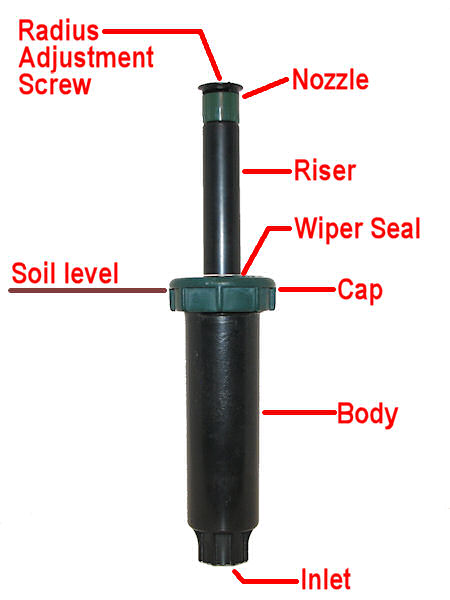
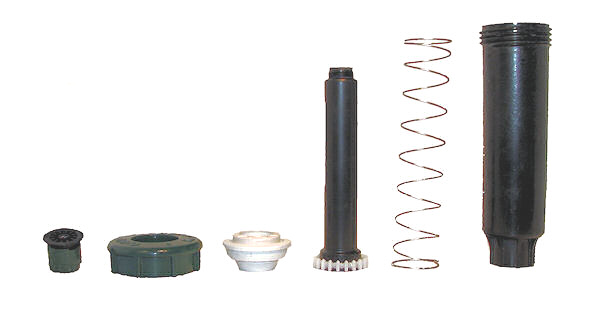
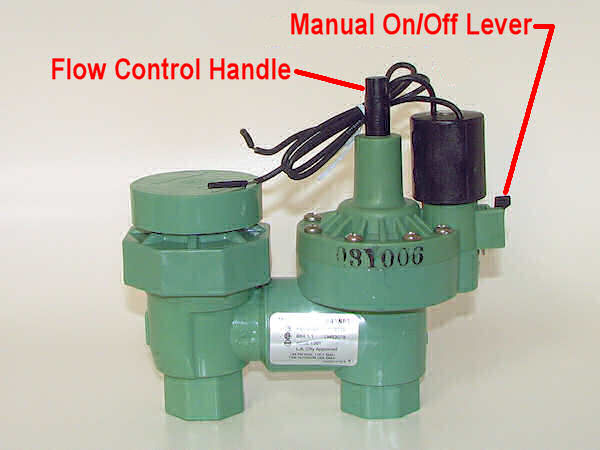
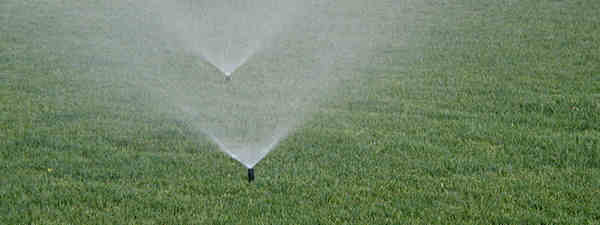
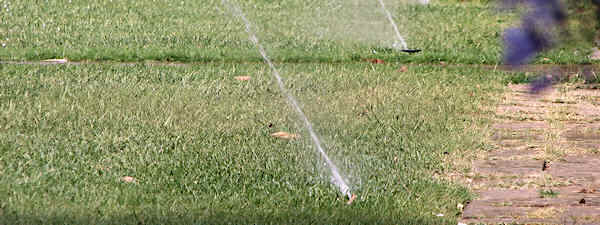
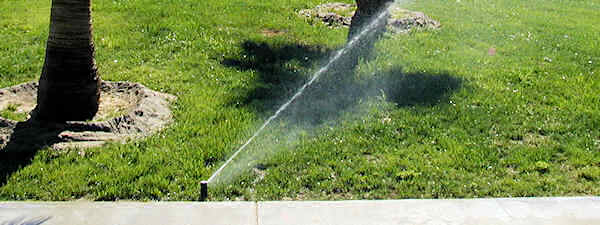
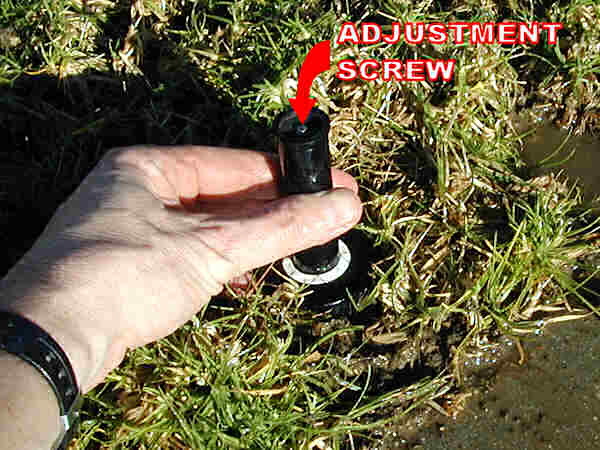
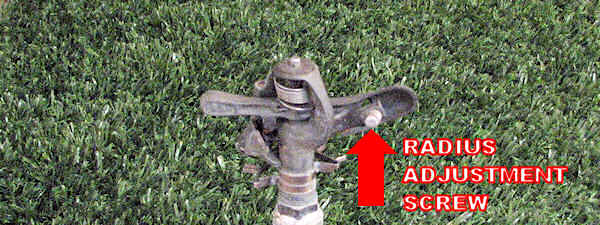
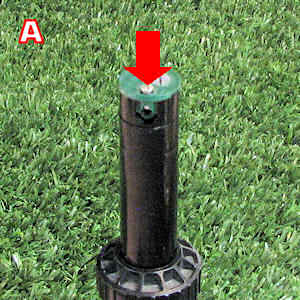
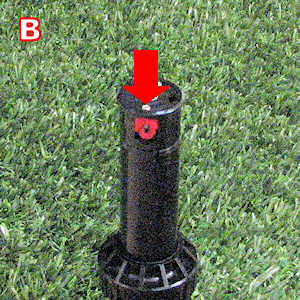
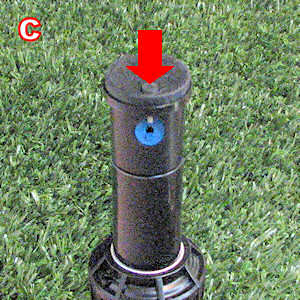
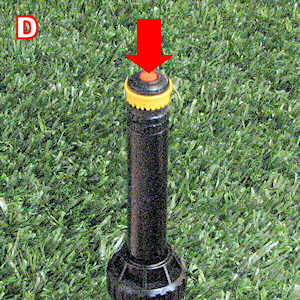
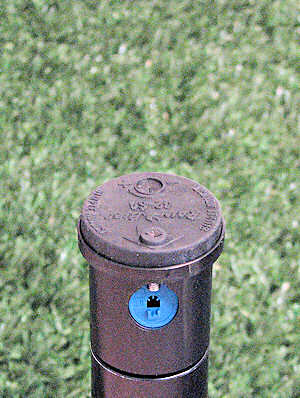
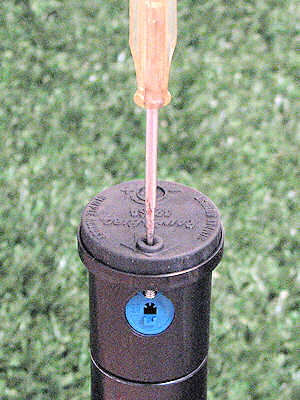
 Have your irrigation system audited. Some water providers will conduct an irrigation audit for you either free or at minimal cost. Check with your water provider. If not, your local water provider can likely provide a list of irrigation auditors in your area. You can also look for a Certified Landscape Irrigation Auditor using the